Categories
- Knowledge and help (92)
- Blog (220)
- Oberon (12)
- bioplasm nls (14)
- Diacom nls (20)
- Metatron Hunter 4025 NLS review (41)
- Metatron Hunter Manual (7)
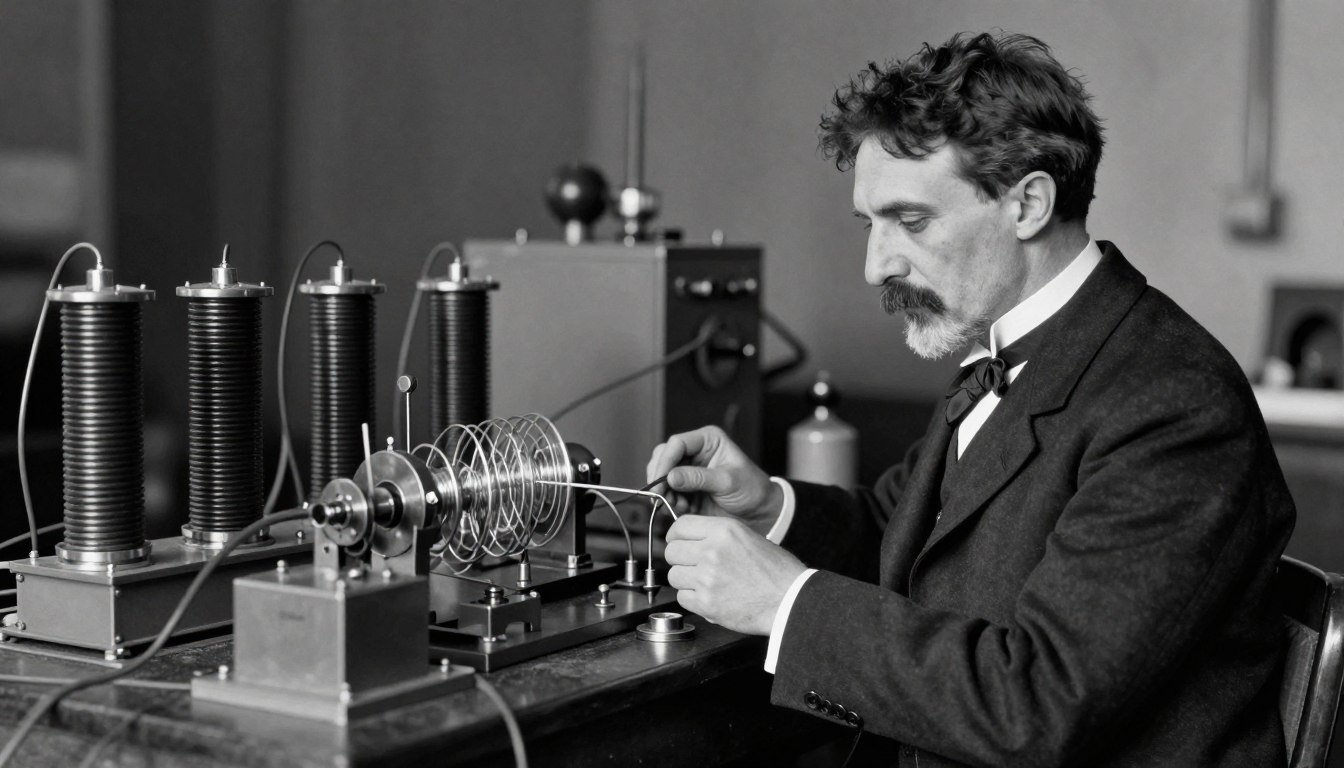
The conceptual roots of non-linear diagnostics stretch back to the brilliant minds of the late 19th and early 20th centuries, when visionary scientists began exploring the relationship between electromagnetic frequencies and biological systems.
Nikola Tesla’s pioneering work with electromagnetic frequencies laid the groundwork for modern non-linear diagnostic technology
The theoretical foundation for Non-Linear Diagnostic System technology began with Nikola Tesla, whose groundbreaking work with electromagnetic fields in the late 1800s established principles that would later become crucial to biofield medicine. Tesla proposed that all matter exists in a state of vibration, with each substance having its own unique resonant frequency. His experiments with electrical resonance demonstrated how energy could be transferred between objects tuned to the same frequency – a concept that would later become fundamental to understanding how cells and biological systems communicate.
Building upon Tesla’s work, French scientist Georges Lakhovsky advanced the theory that living cells emit and receive electromagnetic radiations. In his 1925 work “The Secret of Life,” Lakhovsky proposed that each cell functions as a tiny oscillator, capable of emitting and receiving electromagnetic waves. He suggested that disease occurs when these cellular oscillations are disturbed by external factors, and health could be restored by reestablishing proper cellular vibrations – a concept remarkably aligned with modern understandings of bioresonance.

Royal Rife’s pioneering frequency instruments represented early attempts to apply resonance principles to health
In the 1930s, American inventor Royal Raymond Rife developed what he called the “Universal Microscope,” capable of unprecedented magnification. Through this device, Rife observed that microorganisms responded to specific frequencies. He developed a “Beam Ray” device that could allegedly destroy pathogens by transmitting their resonant frequencies. While controversial in his time, Rife’s work contributed significantly to the concept that electromagnetic frequencies could interact with biological systems in measurable ways.
German physician Dr. Reinhold Voll made another significant leap in the 1950s by combining traditional Chinese acupuncture knowledge with modern electronics. Voll discovered that acupuncture points showed measurable changes in electrical resistance when corresponding organs or systems were diseased. His Electroacupuncture according to Voll (EAV) became one of the first practical diagnostic applications of bioelectrical principles and laid important groundwork for later non-linear systems.
The true transformation of these theoretical concepts into the modern Non-Linear Diagnostic System began with the digital revolution of the late 20th century, when computational power made complex signal analysis possible.

Early digital non-linear diagnostic systems from the 1990s represented a quantum leap in diagnostic capabilities
The transition from analog to digital technology in the 1980s and 1990s marked a pivotal moment in the evolution of non-linear diagnostics. Russian scientists working in space medicine research developed the first true Non-Linear Diagnostic System, designed to monitor the health of cosmonauts during extended missions. These early systems utilized the emerging field of chaos theory and non-linear mathematics to analyze the complex, seemingly random signals emitted by the human body.
Unlike linear systems where output is proportional to input, non-linear systems can produce disproportionate or unexpected results from small inputs – much like biological systems. This non-linear approach allowed for the detection of subtle changes in body function that linear methods would miss, making it particularly valuable for preventative health assessment.
The fundamental principle behind modern NLS technology is the analysis of the body’s biofield – the complex electromagnetic field generated by cellular activity. Every organ, tissue, and pathological process has a unique spectral signature or “etalon” (standard). By comparing the patient’s readings against a database of these spectral etalons, the system can identify patterns associated with various health states, from optimal function to early dysfunction to disease.


Modern NLS systems analyze complex biofield patterns against spectral etalons to identify health patterns
This technology represents a paradigm shift in diagnostic approach – instead of measuring chemical markers or physical structures after disease has manifested, NLS can detect the subtle energetic changes that precede physical symptoms, often by months or years. This capability makes it an invaluable tool for truly preventative healthcare.
Today’s advanced NLS devices offer unprecedented capabilities for comprehensive health assessment and analysis, far beyond what the pioneers of this technology could have imagined.

Modern NLS software provides detailed 3D visualizations of human organ systems with health status indicators
Contemporary Non-Linear Diagnostic System technology has evolved from basic frequency analysis to sophisticated multidimensional scanning. The progression from 3D to 8D and now 9D NLS represents the increasing dimensions of data being analyzed simultaneously. These dimensions include not just spatial coordinates but also frequency, amplitude, waveform characteristics, coherence patterns, phase relationships, entropy measures, and temporal dynamics.
This multidimensional approach allows for incredibly detailed visualization of tissues and organs, with some systems capable of cellular-level analysis. The visual representations are color-coded to indicate degrees of functional stress or imbalance, providing an intuitive interface for both practitioners and patients to understand complex health data.
Modern NLS devices can evaluate virtually every system in the human body, including:

MAIKONG’s advanced NLS devices provide non-invasive, comprehensive health assessment in clinical settings
Beyond diagnostic capabilities, many modern NLS systems also offer therapeutic applications through what’s known as “informational correction” – the transmission of specific compensatory frequencies to help restore optimal function. These include:
These therapies represent a unique bridge between diagnostic and treatment modalities, allowing for personalized intervention based directly on assessment findings.
At the forefront of this technological evolution stands MAIKONG, whose advanced diagnostic systems represent the culmination of decades of research and development in non-linear analysis.

The MAIKONG Metatron Hunter 4025 NLS represents the pinnacle of non-linear diagnostic technology
The flagship MAIKONG Metatron Hunter 4025 NLS stands as the most advanced Non-Linear Diagnostic System available today. This Class II medical device combines sophisticated hardware with powerful analytical software to provide unprecedented insights into health status.
| Specification | Details |
| Main Function | Bacterial research, Ultrastructure, Identifying of nidus borders, Vegeto-test, Smart-filter, Entropy analysis, NLS analysis, Comparative analysis |
| Accuracy | 95% |
| Anatomical Models | 1432 computer graphic models of organs and tissues |
| Spectral Etalons | 4025 digitized spectral etalons of preparations and processes |
| Scanning Time | 2 seconds average |
| Internal Generator Frequency | 4.9GHz |
| Power Supply | USB-port (5V) |
| Warranty | 1 Year with comprehensive technical support |
Discover how the Metatron Hunter 4025 NLS can transform your practice or health journey with unparalleled diagnostic precision.
MAIKONG offers a comprehensive range of non-linear diagnostic solutions to meet diverse needs and applications:
Specialized for directional analysis of energy flows and blockages within the body’s systems, with enhanced sensitivity for detecting subtle imbalances.
Advanced system with expanded database capabilities and specialized algorithms for detecting pathological processes at their earliest stages.
Features enhanced three-dimensional visualization capabilities for comprehensive spatial analysis of tissues and organs.
Incorporates eight dimensions of analysis for deeper insights into functional relationships between different body systems.
The most advanced dimensional analysis available, providing unprecedented detail in biofield assessment and visualization.
Cutting-edge system that integrates multiple analytical dimensions for the most comprehensive health assessment available.
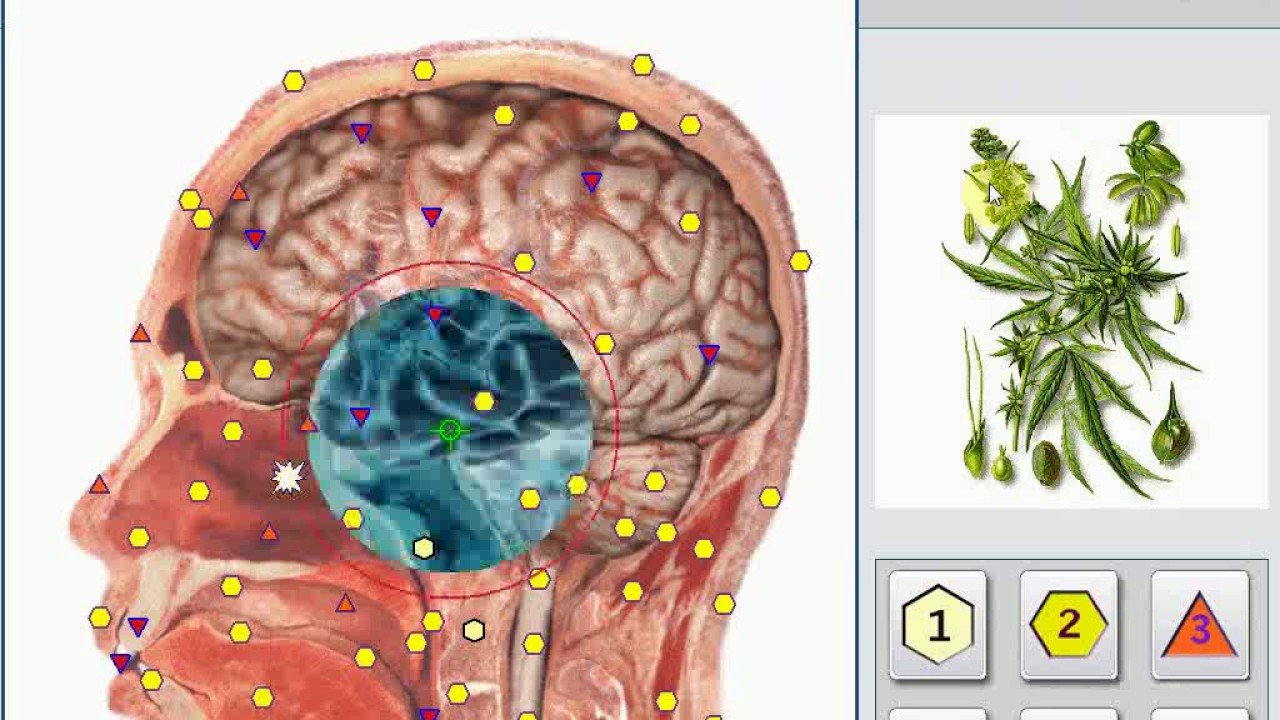


MAIKONG’s sophisticated software interface provides intuitive access to complex health data
MAIKONG’s Non-Linear Diagnostic System software is designed for intuitive operation while providing powerful analytical capabilities. The systems are compatible with:
The user-friendly interface allows practitioners to quickly navigate between different analysis modules, from organ-specific assessments to comprehensive system evaluations. The software automatically generates detailed reports that can be shared with patients or integrated with other clinical documentation.
The Non-Linear Diagnostic System technology has found applications across a wide spectrum of health practices, from conventional medical settings to integrative and holistic health centers.
NLS technology facilitates detailed health discussions between practitioners and patients
Healthcare practitioners have successfully integrated NLS technology into their practices for:

The complete MAIKONG NLS system includes specialized sensors and components for comprehensive analysis
Join healthcare professionals worldwide who are enhancing their diagnostic capabilities with MAIKONG’s advanced non-linear systems.
As we look toward the horizon of healthcare technology, the evolution of Non-Linear Diagnostic System continues to accelerate, with several exciting developments on the horizon.
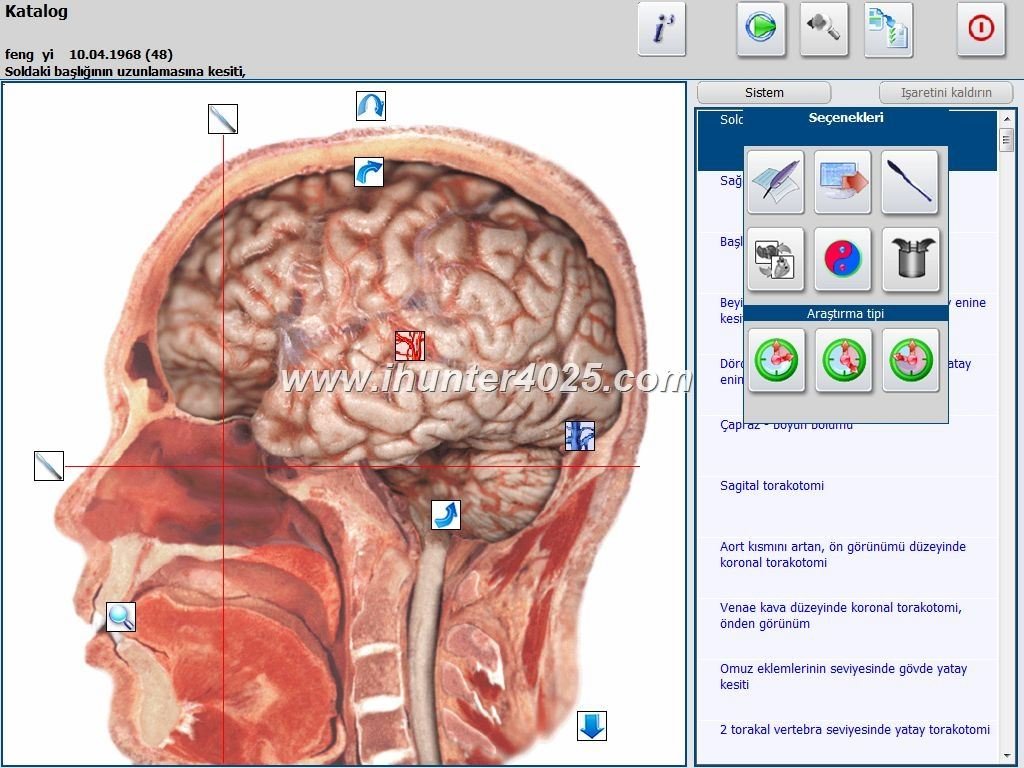


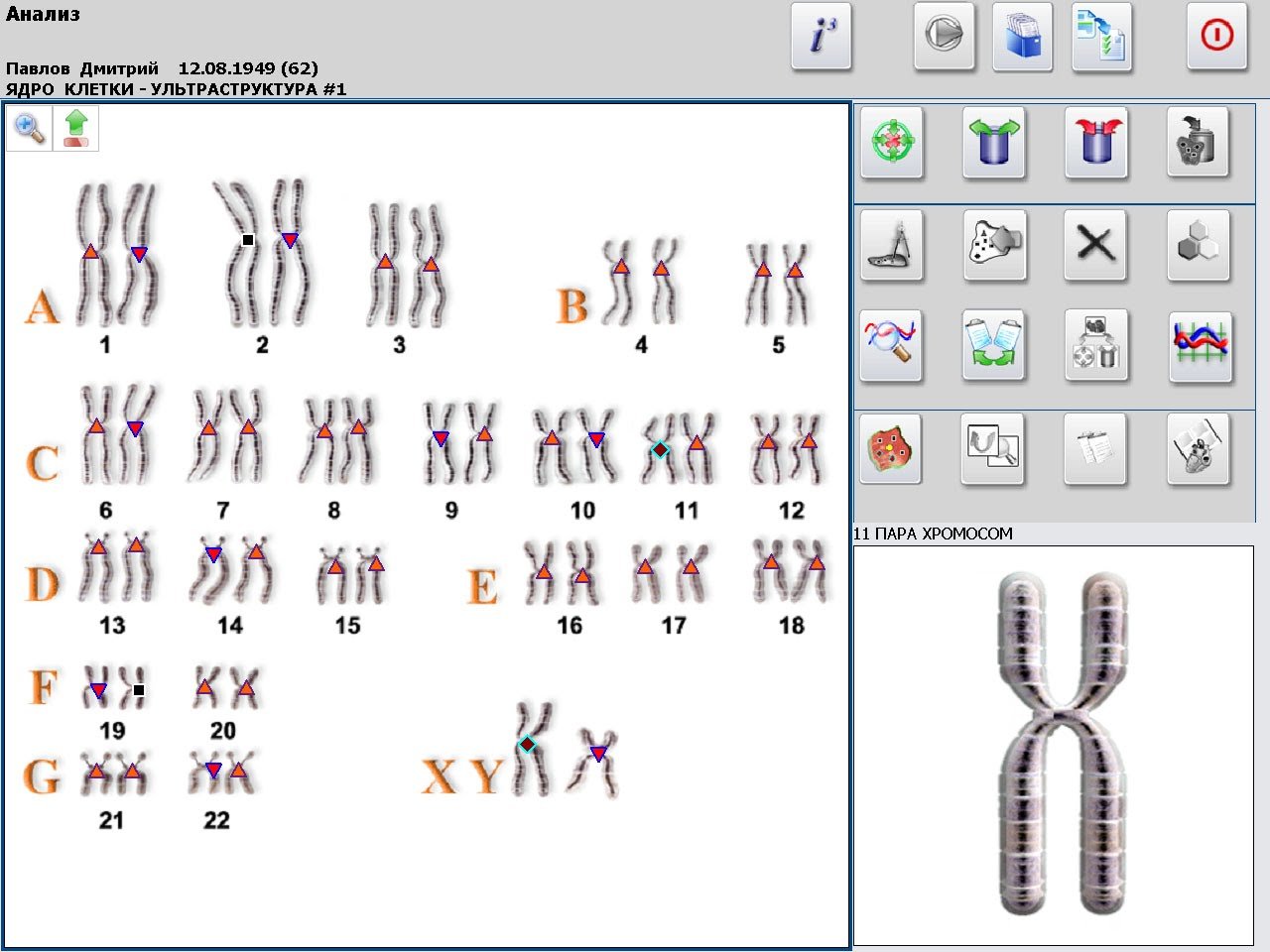
The future of non-linear diagnostics promises even greater integration with AI and advanced visualization technologies
The next generation of NLS technology is likely to feature:
MAIKONG remains at the forefront of these innovations, with ongoing research and development to continuously enhance the capabilities of their non-linear diagnostic systems.
MAIKONG’s research and development team continues to push the boundaries of non-linear diagnostic technology
From Tesla’s pioneering work with electromagnetic frequencies to today’s sophisticated MAIKONG devices, the evolution of non-linear diagnostic technology represents a remarkable journey of scientific discovery and technological innovation. What began as theoretical exploration of the relationship between energy and biology has blossomed into a powerful approach to health assessment that can detect subtle imbalances long before they manifest as clinical symptoms.
As healthcare continues to shift toward more preventative and personalized approaches, the Non-Linear Diagnostic System stands as a bridge between conventional and energetic medicine – offering insights that complement traditional diagnostics while expanding our understanding of the human biofield. MAIKONG’s continued leadership in this field ensures that practitioners and patients alike can benefit from the most advanced non-linear analysis capabilities available today.
Discover how our advanced non-linear diagnostic systems can enhance your practice or personal health journey.
Contact our specialists directly:
Email: Lucy@ihunter4025.com