How to Integrate the Metatron Hunter 4025 into a U.S. Medical Spa Service Menu · hero
Quick answer
Yes — you can add the Metatron Hunter 4025 to a U.S. medical spa service menu as an in‑house non‑invasive screening and personalization tool, provided you use it within clear legal and ethical boundaries. The device supplies digital output (images with epicrisis) on organ/system metrics, meridian analysis, food and emotional indicators and a wide etalon library; these outputs are best positioned as “wellness screening” or “complementary consultation” information that informs aesthetic program personalization, intake screening and progress monitoring. Do not present the device as a diagnostic substitute for licensed medical assessment, and ensure that any clinical concerns identified are referred to an appropriate medical professional.
Contents
Below are the company‑reported core details we rely on when advising medspas. These are MAIKONG’s product facts for the Metatron Hunter 4025 (MK‑018 / MK‑025 variants) and reflect the device and software outputs you will see in a client session. We include exact values as supplied by the manufacturer and point you to the company page for the full product record.
What the Metatron Hunter 4025 actually reports in a client session (practical outputs you will see and use)
In a commercial medspa workflow you will not use raw device claims; you will use the software outputs. According to the company snapshot, the Metatron Hunter 4025 produces:
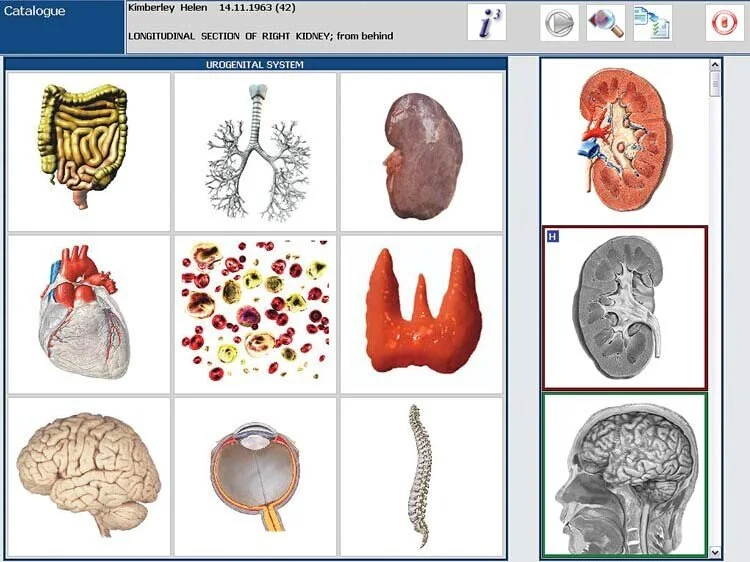
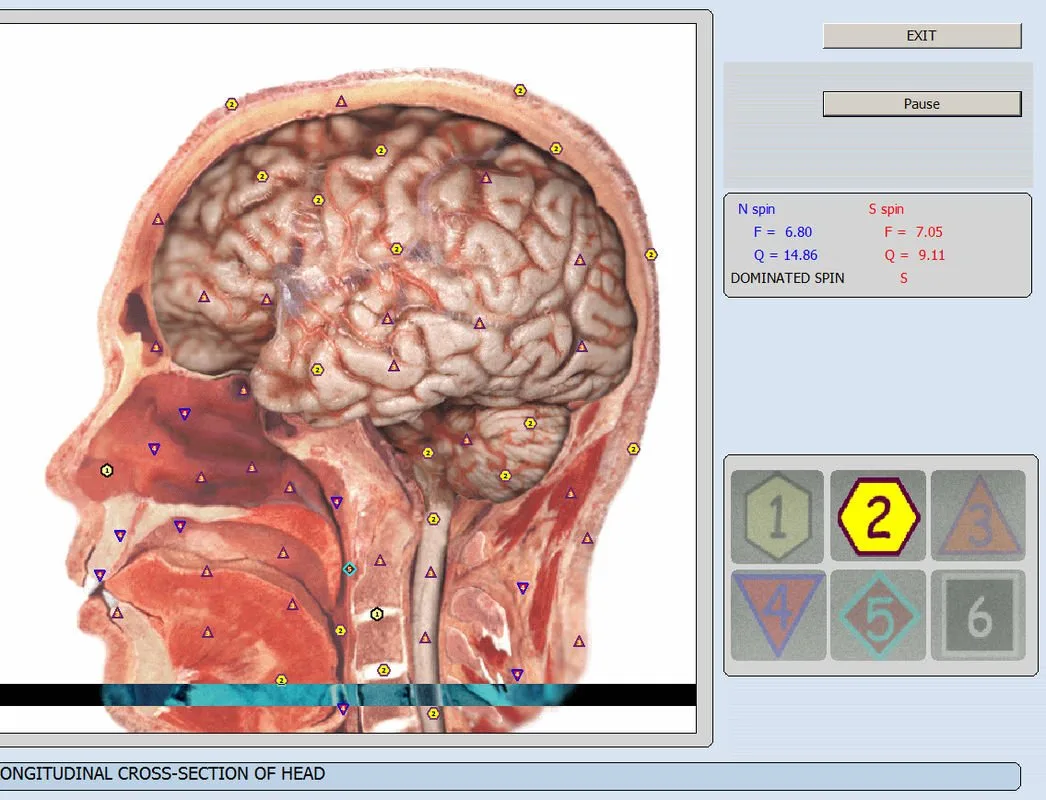
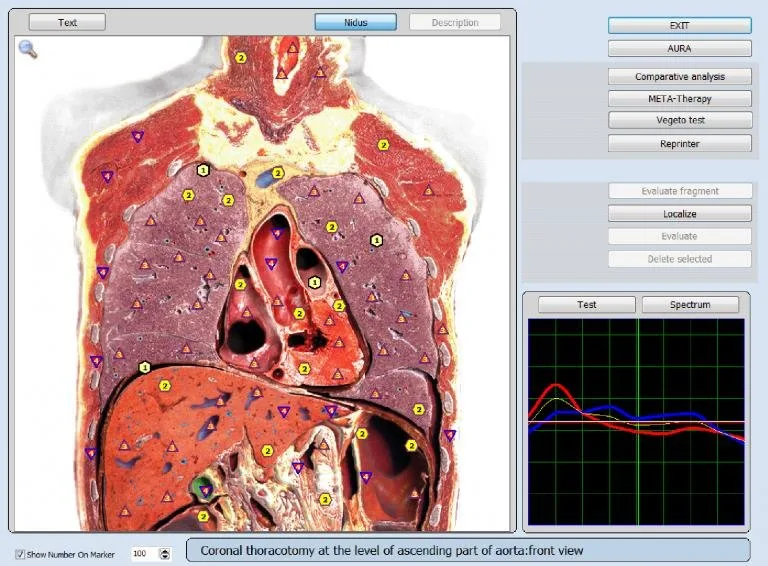
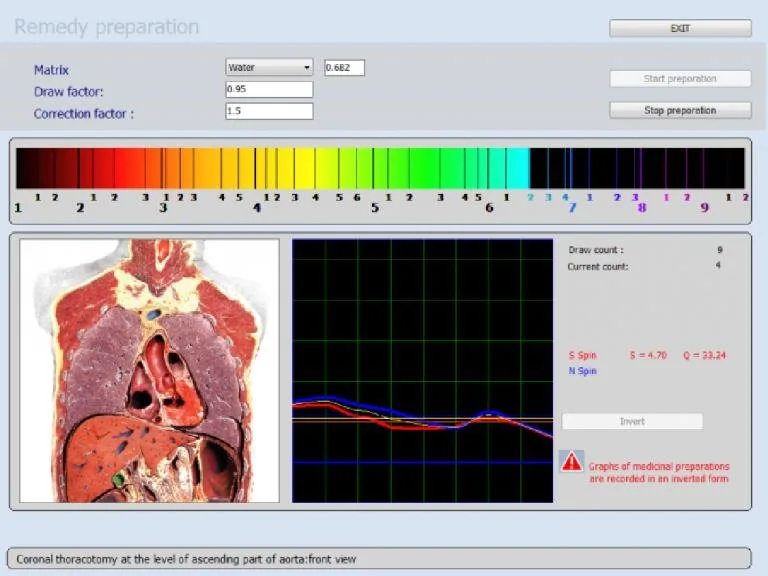
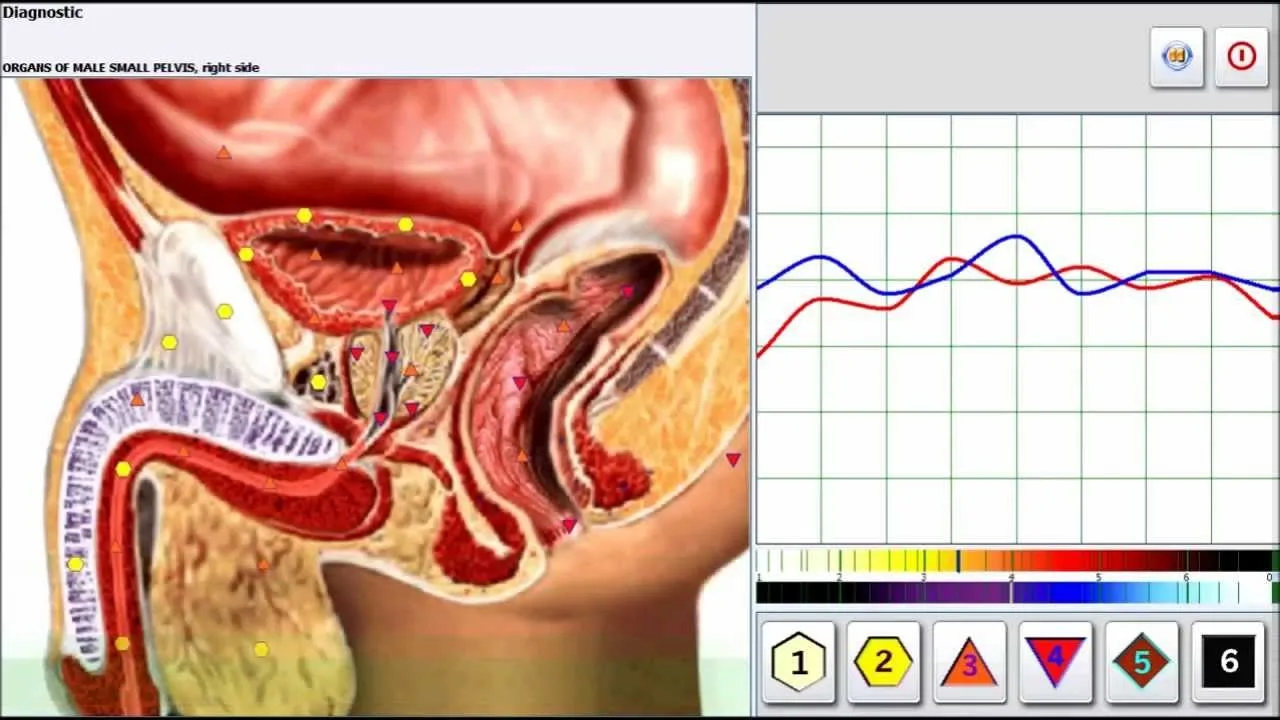
Graphical organ and system images with an accompanying epicrisis report.
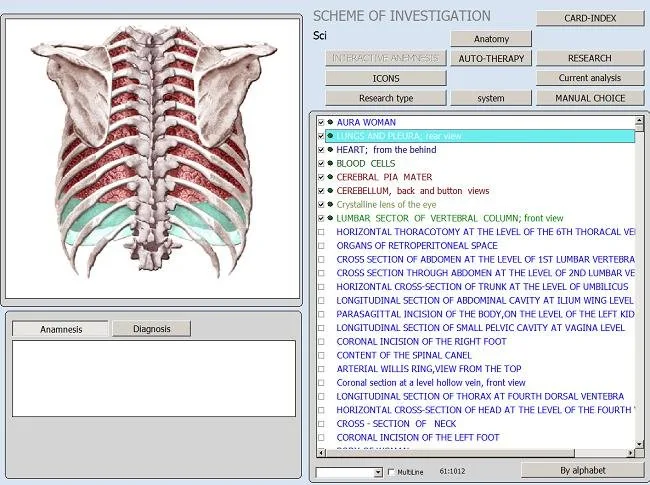
Meridian analysis (company lists Meridians Analysis = YES).
Food analysis and emotional analysis indicators (both reported as YES).
Reference matches against a large etalon library that includes organ entries, pathomorphologies, allergens, nutraceuticals and homeopathy formulas.
An autoadjust feature described as “Autoadjust correct processor’s deviation,” which is an internal calibration/process control reported by the supplier.
Operationally, the output you will hand to staff or clients is an image‑based report with summary commentary (the epicrisis). That report lists flagged items from the vendor database (for example, organ stress patterns or nutritional suggestions) rather than clinical test values like lab panels. We treat those outputs as decision‑support information, not definitive medical results.
Which medical‑spa services benefit most and realistic scope
For medical spas the Metatron Hunter 4025 fits where aesthetic decisions intersect with lifestyle and wellness profiling. Its natural uses are:
Intake screening and baseline wellness profiling. Use the report to structure an extended consultation, capture client health priorities, and surface items to flag for physician review.
Personalization of aesthetic plans. Use the device findings to tailor product recommendations, topical regimens or adjunctive wellness suggestions (nutrition, supplements) while clearly noting these are non‑diagnostic inputs.
Progress monitoring. Repeating scans over the course of a multi‑visit aesthetic program can provide internal comparison reports (same‑software timeline) to document client engagement and perceived changes in the parameters the device tracks.
What it is not suitable for in a medspa environment:
Primary medical diagnosis of disease states. It should not replace labs, imaging studies, or licensed medical evaluation for pathology.
Standalone treatment justification. Never base an invasive procedure or prescription solely on this device’s report.
Service design: sample medspa menu items that include Metatron Hunter 4025
Below are pragmatic menu concepts framed for the medspa buyer. We avoid specific price points (pricing on inquiry) and focus on structure, client value, and internal handoffs.
Complementary Wellness Screening (add‑on to initial consult)
Positioning: short, non‑invasive scan presented as an intake enhancement. Purpose: deepen the clinician’s intake picture and identify items needing referral.
Session flow (conceptual): client intake → device scan → clinician review of images/epicrisis → focused discussion of findings and recommended next steps (cosmetic plan or physician referral). Keep communications framed as “wellness information” and “suggested follow‑up.”
Positioning: data‑informed plan for multi‑visit cosmetic programs. Purpose: to personalize product choices, combine device outputs with skin analyses and photographic records.
Sample flow: combined skin assessment → Metatron scan → integrated plan generated and reviewed by the responsible clinician or RN → schedule treatment milestones with progress scan points.
Positioning: a value add for retention and client motivation. Purpose: track changes that correspond to a series of spa treatments or lifestyle interventions.
Flow: pre‑treatment baseline in file → scheduled re‑scan at agreed program intervals → compare reports with client and adjust the plan or refer when new medical issues appear.
Staffing and training needs for medspa use
How to Integrate the Metatron Hunter 4025 into a U.S. Medical Spa Service Menu · body
Operational clarity keeps regulatory risk low. For routine medspa use we recommend a two‑tier staffing model:
Scanning operator: non‑licensed staff or technician who performs the scan, manages software, prints or uploads the report, and files the record. Training focus: software operation, basic troubleshooting, data privacy procedures, and consistent scan protocols to ensure comparability over time.
Clinical reviewer: a licensed clinician (RN, NP, MD) who interprets the report in the context of the medical intake and communicates any clinical‑level recommendations or referral needs to the client. Training focus: how to position device outputs, what constitutes a referral trigger, and compliant language for the U.S. market.
Training outline we recommend (internal):
Module 1 — Device basics and safety: what the device outputs, supported OS, and how to capture a consistent scan.
Module 2 — Reading the Hunter report: how to summarize the epicrisis and translate flagged items into client‑friendly language without making diagnostic statements.
Module 3 — Compliance & consent: required client disclosures, documentation and when to escalate to a clinician.
Module 4 — Workflow scripts: front desk scripting, booking, and follow‑up messaging templates that avoid medical claims.
Room, power and IT checklist for safe, repeatable sessions
How to Integrate the Metatron Hunter 4025 into a U.S. Medical Spa Service Menu · body
Checklist points to verify before you run commercial sessions:
Physical space: a quiet, private consultation room with a stable table and comfortable seating for the client and technician.
PC requirements: the manufacturer reports the software “Hunter” and support for Windows 11/10/8/7. Use a dedicated Windows machine that meets the software vendor’s stated hardware requirements; keep the PC on a secure, encrypted network and perform regular backups of client reports.
Connectivity and peripherals: a USB port (or the vendor‑specified interface) for the scanner probe, a reliable printer or secure PDF export capability, and an isolated folder for storing images/reports under HIPAA‑aligned controls if you handle protected health information.
Power and installation: the company facts do not specify U.S. site electrical installation details; confirm local power requirements and any adapter/transformer needs with the vendor before purchase. Do not assume dual‑voltage compatibility unless documented.
Software maintenance: note the supplied software version (Hunter, 2026). Plan for vendor updates and a process to test updates on a non‑production machine before rolling them out to patient‑facing workstations.
Client consent, marketing language, and regulatory caution for U.S. medspas
How to Integrate the Metatron Hunter 4025 into a U.S. Medical Spa Service Menu · body
How you present the device is as important as how you use it.
Consent and front‑end statements
Use a plain‑language consent form that says the device provides a wellness screening and information report, and that it is not a medical diagnostic test. Include consent to store images/reports and to share results with the responsible clinician.
Require signed clinician referral consent when scan findings suggest medical follow up.
Compliant marketing language (examples of what to say and avoid)
Acceptable: “Non‑invasive wellness screening,” “data‑assisted consultation,” “supplemental information to personalize your aesthetic plan.”
We recommend that any promotional copy be reviewed by your legal counsel to ensure it aligns with state medical board rules and FTC truth‑in‑advertising guidance.
Pricing and packaging guidance for medspa services
How to Integrate the Metatron Hunter 4025 into a U.S. Medical Spa Service Menu · body
We do not provide list prices; pricing should reflect your local market, overhead and perceived value. Below are practical ways medspas typically package a device like the Metatron Hunter 4025:
Add‑on to a consult: a low‑friction ancillary fee that makes the client feel their plan is “personalized.”
Stand‑alone wellness scan: offered as a premium consult product with clinician review included. Good for new client acquisition when paired with an introductory aesthetic service.
Program inclusion: include scans at milestone intervals within multi‑visit packages to create an objective timeline and justify program renewals.
When setting tiers consider time cost, clinician review time, and documentation steps. Always be prepared to show clients a sample report and a clear explanation of what is and is not claimed by the report.
How to use Metatron 4025 reports to create personalized aesthetic programs (practical steps)
How to Integrate the Metatron Hunter 4025 into a U.S. Medical Spa Service Menu · body
Practical workflow from scan to treatment plan we use and recommend for medspas:
Intake and red‑flag screening: collect medical history and consent, and perform the Metatron scan early in the consult to surface items to be addressed by the clinician.
Clinician triage: the licensed reviewer determines whether findings can be integrated into an aesthetic plan or require external referral. Document the rationale for any referral.
Plan synthesis: combine skin assessment, photographic records and the Metatron report to create a coherent program that lists treatments, adjunctive topical or nutraceutical suggestions (as wellness recommendations), and agreed milestones for re‑scanning.
Client agreement: provide the client a written plan and the device report, using non‑diagnostic language. Obtain client buy‑in for the monitoring schedule.
Follow‑up and revision: repeat scans at pre‑agreed intervals to generate comparison reports; adjust the program based on trends and client response while ensuring all medical concerns remain within clinician oversight.
Evidence limits and responsible use: what Metatron Hunter 4025 does not prove and how to avoid overstating results
How to Integrate the Metatron Hunter 4025 into a U.S. Medical Spa Service Menu · body
Responsible use is critical for legal, ethical and reputational reasons. Key limitations to state clearly to staff and clients:
The supplier’s accuracy statement (95%~98%) is a company claim; it is not the same as regulatory approval or clinical validation in peer‑reviewed studies unless such evidence is provided separately. Treat company accuracy claims as vendor data‑points, not independent verification.
The device outputs are comparative and library‑based matches, not laboratory values. They are best used as complementary information, not as a diagnostic substitute for testing (blood tests, imaging) or licensed medical assessment.
There is no company‑supplied FDA clearance cited in the provided facts; do not assert FDA clearance for diagnostic claims. The vendor declares ISO 9001 and CE as company certifications; reproduce those declarations only as declared and do not imply U.S. regulatory approval beyond what the vendor explicitly states.
Electrical/site installation specifications for U.S. facilities are not supplied in the materials we used. Confirm local electrical requirements with the vendor before purchase.
Operational checklist before first commercial session
Use this pre‑launch checklist to reduce mistakes on day one:
Obtain a demo unit or live demonstration and review sample reports to confirm how the outputs appear to staff and clients.
Confirm software version (Hunter, 2026) and supported Windows OS on your target workstation; test the workflow end‑to‑end on your network.
Draft a client consent form with legal review that states the device is a wellness screening tool and not a diagnostic medical device.
Create staff scripts for scanning, report delivery and clinician handoffs; include escalation criteria for clinician referral.
Set up secure storage for reports and integrate them into your client record process (HIPAA‑aligned if you store health data).
Run a soft launch with a limited internal audience and at least one licensed clinician present to validate report interpretation and communication style.
How to present results to clients — language and delivery
We recommend a two‑stage report delivery model:
Technician‑to‑client: a brief, neutral explanation of what the images show and a statement that a clinician will interpret the meaning.
Clinician‑to‑client: a concise explanation tying the device output to the aesthetic plan, with explicit referral recommendations when findings fall outside the scope of cosmetic care.
Sample clinician phrasing: “The screening report highlights a few systems that the system flags for attention. We’ll integrate those findings into your cosmetic plan and, for anything that looks like a medical concern, we’ll recommend medical evaluation. This scan is supplemental information to help us personalize your program.”
Common operational pitfalls and how to avoid them
Pitfall: presenting report items as definitive diagnoses. Fix: train clinicians to frame findings as “indicators” and require clinical correlation.
Pitfall: inconsistent scan technique that undermines comparison over time. Fix: document a standard scan protocol and log operator identity for each session.
Pitfall: unclear data storage procedures. Fix: adopt secure storage practices and limit access to clinicians and authorized staff only.
The product technical details and database counts in this article come from the manufacturer’s product snapshot for the Metatron Hunter 4025 (data‑fact‑id=”122″, software “Hunter” version 2026). These are company‑reported values; we have preserved the exact model identifiers and reported values here. The vendor also declares ISO 9001 and CE; those are reproduced as the company’s declarations.
What we do not have in the supplied materials: independent clinical validation documents, U.S. federal regulatory clearance (e.g., FDA), or explicit U.S. electrical/site installation specifications. Those gaps narrow what you can responsibly claim to clients and regulators; before using the device in ways that approach medical diagnosis, obtain independent clinical guidance and confirm regulatory status for your intended use.
FAQ (selected)
Can I advertise that the Metatron Hunter 4025 “diagnoses” conditions?
No. In the U.S. you must avoid diagnostic claims unless you have the proper regulatory clearance and clinical validation for the specific diagnostic use. Use terms such as “wellness screening” and “data‑assisted consultation.”
Who should review concerning scan results?
A licensed clinician (RN, NP, or MD depending on the state scope) should review any findings you consider could indicate medical issues. The device report itself is not a substitute for clinical judgment.
Will the vendor train my staff?
The vendor typically offers training and technical support; confirm training scope and whether it includes clinical interpretation or only device operation. We recommend pairing vendor operation training with clinical training scoped by your lead clinician or medical director.
Final note and invitation: If you want an official quote, sample report package, or to discuss US distribution/agency arrangements, email Lucy@ihunter4025.com or message via WhatsApp at +8613510907401. We can send sample reports, discuss training options, and outline a distribution partnership for the U.S. market.
This article is for general information only and does not replace medical diagnosis or treatment, nor should it be used as a medical diagnostic tool. For clinical questions or patient‑specific decisions consult a licensed healthcare professional.
本⽂仅供⼀般信息参考,不能替代医生诊断或治疗,也不作为医疗诊断依据。
This content is provided for learning, information sharing and professional communication only. It is not medical advice and is not a basis for treatment or diagnosis. Confirm suitability, operation and purchasing requirements against the product manual, local regulations and qualified professional guidance.
If you want a configuration recommendation for your practice size or a quotation, contact our sales team with basic information about your intended use (single‑room demo, centralized clinic system, number of clinicians). We can provide configuration options, confirm software compatibility, and discuss training and distribution opportunities for U.S. partners.