Metatron hunter 4025 nls Supplier

3d cell nls diagnostics: Safety, Evidence, Compatibility, and Buyer Verification


The phrase 3d cell nls diagnostics designates non-linear spectral biofeedback and bioresonance equipment designed to record subtle electrodynamic responses across biological targets for educational and wellness evaluation. These instruments generate frequency patterns through light-emitting headphone sensors and resonant cups to visualize energetic state variations against cataloged databases. They serve strictly for wellness tracking, lifestyle stress observation, and informational reference, and they do not provide medical pathology diagnosis, clinical verification, or disease cure.
Procuring reliable bioresonance systems requires separating documented hardware capabilities from unverified marketing assertions. Distributors, clinic operators, and technology resellers must confirm operating system stability, component provenance, and software licensing prior to entering formal commercial agreements. Clear inspection protocols and strict adherence to non-medical practice scopes protect both practitioners and service recipients.
What the Term 3d Cell NLS Diagnostics Signifies in Wellness Hardware
Equipment listings frequently apply the term 3d cell nls diagnostics to describe computer-assisted bio-spectral evaluation devices that project cellular and tissue models on a digital monitor. In technical catalogs, “3D” originally referred to early three-dimensional graphic representations of organs, while “NLS” denotes non-linear scanning systems developed from resonant frequency physics. Modern iterations within the MAIKONG portfolio expand these graphic models across hundreds of anatomical structures, yet the operational principle remains rooted in frequency synchronization rather than medical imaging.
Buyers must understand that cellular depictions inside the user interface are graphic approximations mapped to algorithmic data. The instrument compares detected electrical feedback from the subject against digital spectral libraries stored inside the control software. These readouts reflect relative bio-energetic balance and entropy markers rather than cellular histopathology or physical laboratory biopsies.
Equipment designated for 3d cell nls diagnostics provides data intended exclusively for wellness management and educational reference. It does not replace clinical pathology, radiologic imaging, or formal medical examination by licensed healthcare professionals.

Evidence Hierarchy for Bioresonance and NLS Equipment
Systematic sourcing requires categorizing manufacturer documentation, functional demonstrations, and supplier claims into distinct evidential tiers. Marketing brochures often blend factory hardware specifications with theoretical biofield concepts, creating confusion during the procurement phase. A structured evidence hierarchy enables professional buyers to verify what a system physically delivers versus what promotional literature asserts.
Factory-level engineering confirms physical attributes such as USB bus power, internal frequency generator output, connector durability, and chassis construction. Conversely, broad assertions regarding systemic disease detection or therapeutic resolution fall into promotional categories that lack independent clinical verification. Importers must hold suppliers accountable to verifiable technical documentation before completing international wire transfers.
| Evidence Level | Documentation Type | Procurement Verification Action |
| Level 1 | Physical Specs | Examine voltage, current draw, USB connectivity, and sensor materials directly. |
| Level 2 | Software Stability | Confirm driver compatibility and software dongle operation on target Windows editions. |
| Level 3 | Factory Testing | Verify factory batch quality control and assembly procedures via video demonstration. |
| Level 4 | Unverified Claims | Treat promotional healing percentages and diagnostic labels as unconfirmed marketing text. |

Verifying Technical Specifications and Documentation
Evaluating hardware related to 3d cell nls diagnostics requires reviewing engineering parameters against published product sheets. Standard MAIKONG units feature an internal generator frequency rated at 4.9 GHz, drawing operating power directly through a standard 5V USB connection from the host computer with a current consumption of up to 300 mA. The firmware communicates with the primary application via proprietary driver architecture paired with an encrypted security key.
Software packages supplied with these units incorporate extensive digital libraries, listing up to 1,432 organ and tissue graphic models alongside 4,025 digitized spectral etalons covering botanical, environmental, and biochemical reference profiles. While source materials cite a rapid average scan cycle of approximately 2 seconds per target tissue, scanning depth depends on chosen operator parameters and hardware model selection.
- Internal high-frequency generator output operates at a standard rating of 4.9 GHz.
- Electrical supply requires 5V direct current delivered through standard computer USB ports with consumption under 300 mA.
- Integrated digital databases contain up to 1,432 computer graphic models of anatomical tissues and organs.
- Spectral etalon repositories incorporate up to 4,025 digitized frequency profiles for comparative research.
- Source catalogs cite scanning intervals of roughly 2 seconds per organ point during automated runs.

Hardware Components and Physical Package Inspection
Legitimate hardware packages arrive inside a dedicated aluminum travel case engineered to shield internal components during commercial transit. Upon opening the package, buyers must verify the presence of the primary processor unit, specialized optical headphone sensors, a testing resonance cup, the blue USB host connection cable, and dual high-grade black link cables. A physical USB security dongle and software installation optical disc or flash storage complete the necessary accessory group.
Each component must undergo tactile and visual inspection for manufacturing integrity. The testing cup must show clean metallic contact plating, the headphone sensors must feature secure cabling free from pinching, and all USB interface plugs must seat firmly into their respective ports without mechanical play.
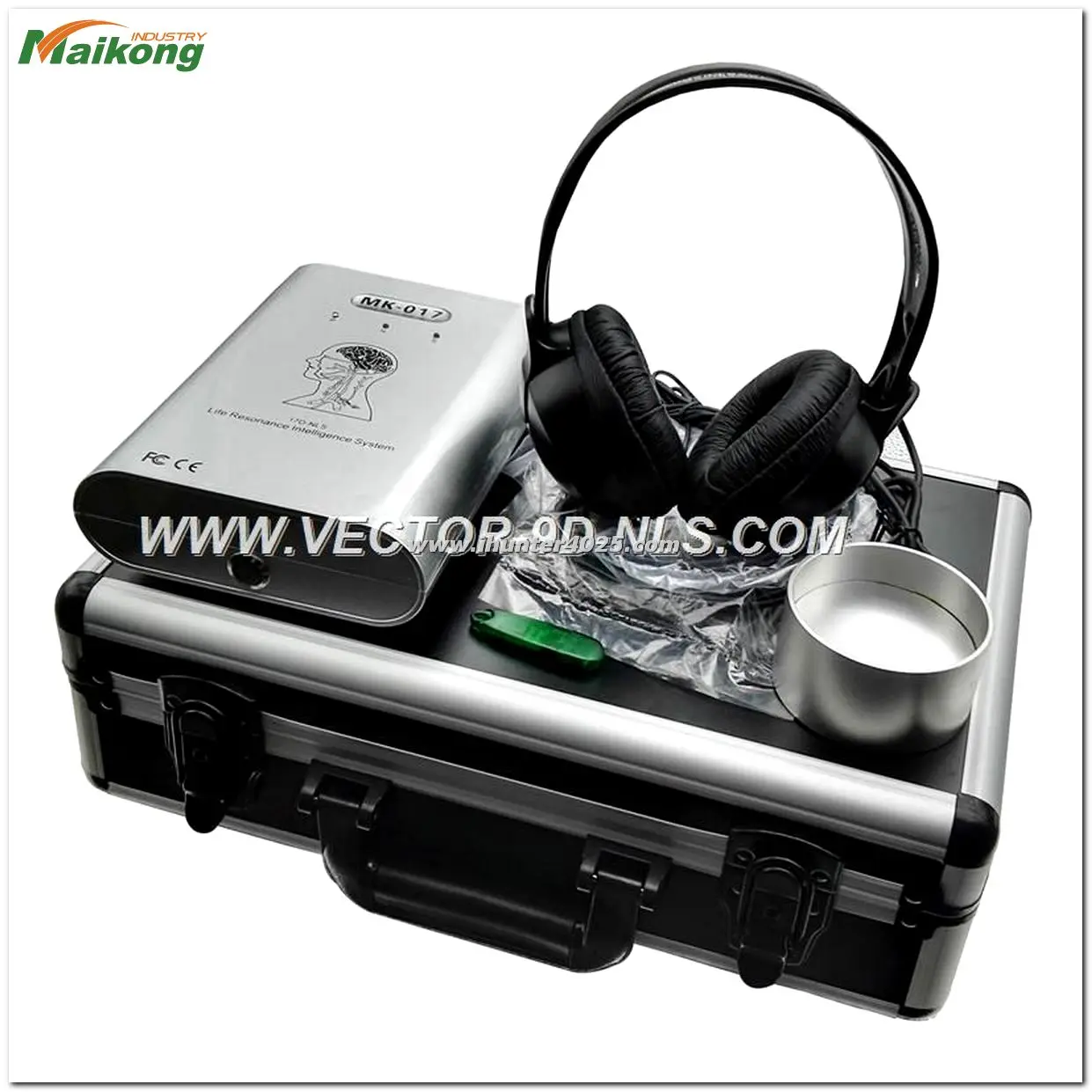
Enclosure and Shielding
High-grade aluminum cases protect internal circuit assemblies from mechanical shock and static discharge during international freight movements.

Sensor Headphone Unit
Headset units contain bio-inductive pickup coils and light emitters that deliver frequency stimuli directly to the subject during testing sessions.

Resonance Testing Cup
External test chambers allow operators to test material samples and conduct inverted frequency output procedures using biological or botanical matrices.
Verify System Hardware and Build Options
Review factory hardware sheets, package lists, and connector diagrams before confirming equipment orders for professional wellness facilities.
Software Operation and Operating System Compatibility
Control software engineered for 3d cell nls diagnostics executes complex mathematical comparisons between received sensor input and mathematical models stored in local directories. Stable system operation depends entirely on matching the device firmware with supported operating systems. MAIKONG software packages are engineered specifically for Microsoft Windows environments, maintaining compatibility across Windows 2000, Windows XP, Windows Vista, Windows 7, Windows 8, Windows 10, and Windows 11 across both 32-bit and 64-bit architectures.
The operating environment requires minimum hardware resources consisting of a 1 GHz processor, 512 MB of system memory, an SVGA video adapter supporting 1024×768 resolution, at least 1 GB of unallocated disk space, and two available USB ports. Equipment users who manage multi-modality setups, such as those running a Metatron 4025 platform, must ensure dedicated driver installation without third-party virtualization layers.
MAIKONG software does not support Apple macOS, Linux, or Unix operating systems. Attempts to operate the program through emulators or virtual machines frequently disrupt real-time USB communication with the frequency generator.

Distinguishing Models Across the MAIKONG Lineup
Resellers and center directors must navigate various naming designations to select equipment that matches their operational scope. The MAIKONG catalog spans progressive hardware generations, ranging from baseline 3D units to advanced multi-dimensional platforms. Equipment such as the standard 8D NLS and upgraded 9D NLS systems deliver foundational organ bio-resonance tracking with refined user interfaces.
Facilities requiring broader analytical breadth often evaluate the 18D NLS platform or specialized systems designed around unique spectral databases. Understanding database capacity, scanning algorithms, and sensor sensitivity differences prevents overpaying for superfluous features while matching practice capacity.
| System Line | Database Scale | Primary Operational Scope |
| 3D NLS | Standard | Foundational organ energetic assessment and lifestyle stress tracking. |
| 8D / 9D NLS | Expanded | Detailed biofeedback analysis with enhanced spectral reference libraries. |
| Hunter 4025 | Extensive | Deep tissue virtual scanning with multidimensional spectral etalons. |
| 18D Series | Maximum | Comprehensive wellness center assessments across broad anatomical models. |

Reviewing Manufacturer Functional Claims and Spectral Etalons
Manufacturer catalogs often describe non-linear systems using terminology like “recognizes and treats” or “informational correction.” Within original documentation, these functions refer to generating inverted or modulated frequency waveforms through sensor headphones or the resonance cup to balance energetic disharmonies. Modalities such as Metatherapy, Lithotherapy, and Phytotherapy utilize digitized spectral signatures of minerals and botanicals to provide biofeedback stimulation.
Buyers must examine these descriptions analytically. While historical pioneers such as Nikola Tesla, Georges Lakhovsky, Royal Rife, and Reinhold Voll explored electromagnetic fields and bio-acupuncture points, promotional materials that claim a Non linear diagnostic system achieves “95% accuracy” represent unverified supplier statements rather than peer-reviewed clinical findings. Such features must be positioned strictly as energetic harmonizing aids rather than medical therapies.
Documented Strengths
- Non-invasive frequency observation allows comfortable client stress assessments.
- Extensive digital libraries offer comprehensive references for holistic lifestyle planning.
- Hardware operates stably across widely available Windows desktop and laptop systems.
Operational Boundaries
- Readouts do not provide clinical medical diagnosis or histopathologic proof.
- Factory accuracy figures require independent validation and vary by operator proficiency.
- Software updates remain constrained strictly to Windows operating environments.

Supplier Due Diligence, OEM Customization, and Warranty Terms
Procurement professionals must conduct thorough supplier audits when ordering bioresonance equipment from international manufacturers. Factory documentation from Shenzhen MAIKONG Technology Co., Ltd. indicates a standard monthly production capacity of 3,000 units, with typical order dispatch occurring within 3 to 5 business days following payment confirmation via T/T, Western Union, or PayPal. Shipments move via global carriers such as DHL, UPS, TNT, or FedEx departing Shenzhen ports.
Buyers exploring private labeling should note that custom logo printing and tailored exterior packaging typically require a minimum order quantity of 200 units. Furthermore, buyers must reconcile warranty statements across written supplier agreements. Source materials present conflicting references—citing 1-year, 2-year, and 1-to-3-year coverage periods—making it essential to confirm specific terms, parts replacement policies, and shipping responsibilities in the final commercial invoice prior to purchase. Integrating proper operator Training reduces user error and protects hardware longevity.
Warranty coverage applies to manufacturing defects and component failures. Purchasers must confirm the exact warranty duration in writing, as supplier documentation contains differing 1-year, 2-year, and 3-year provisions.

Regulatory Boundaries, Safety Standards, and Practice Scope
Commercial deployment of systems associated with 3d cell nls diagnostics requires strict compliance with regional health regulations. In the United States and international markets, regulatory bodies categorize these non-invasive devices under biofeedback, relaxation, or informational wellness instruments rather than medical diagnostic machines. Source references classifying units as “Class II Biochemical Analysis Systems” represent supplier descriptive phrasing that must not be mistaken for formal medical clearance.
Practitioners operating in integrative settings—including clinics focusing on ozone applications, detox programs, anti-aging protocols, and longevity coaching—must maintain precise boundary language. Integrating complementary modalities like an 8G TCM platform requires clear consent forms stating that sessions serve wellness education and stress reduction purposes rather than disease prevention or cure.
Appropriate Wellness Scope
- Monitoring general bio-energetic balance and lifestyle stress factors.
- Educating clients on environmental and nutritional frequency resonance.
- Guiding personal wellness goals, relaxation techniques, and fitness routines.
Restricted Medical Actions
- Issuing clinical disease diagnoses or identifying specific medical pathologies.
- Prescribing pharmaceuticals or replacing conventional medical care regimens.
- Claiming curative outcomes for acute or chronic infectious diseases.

Pre-Purchase Inspection Checklist for B2B Importers
Distributors and clinic buyers should follow a structured verification routine before deploying units in commercial environments. Verifying hardware functionality and software licensing beforehand prevents operational downtime and reduces customer service disputes.
- Inspect the physical shipment immediately upon arrival and document the condition of outer cartons and internal foam inserts.
- Verify that the package contains the host device, optical sensor headset, resonance testing chamber, dual link cables, and USB interface cable.
- Confirm the presence of the encrypted USB hardware dongle and verify that software installation media matches the required language version.
- Connect the system to a clean Windows computer running Windows 7, 8, 10, or 11 to verify driver stability and USB power draw.
- Conduct a baseline diagnostic test run using the resonance cup to ensure uninterrupted communication with the internal generator.
- Review written commercial documentation to verify the exact warranty duration, technical support access, and return procedures.

Frequently Asked Questions About 3d Cell NLS Diagnostics
What is 3d cell nls diagnostics?
The term describes bioresonance and non-linear spectral hardware that measures energetic responses across cellular and organ models. The technology serves for lifestyle stress analysis and educational wellness monitoring rather than clinical pathology detection.
Can NLS equipment provide a medical diagnosis?
No, NLS devices do not provide medical diagnosis, clinical pathology confirmation, or treatment for diseases. All generated data must be interpreted strictly as informational bio-energetic reference markers within a wellness practice framework.
How can a buyer verify the model and software?
Buyers should request live video demonstrations from the supplier showing the physical unit, the USB dongle, and software version screens. Confirm that the internal generator specifications and software interface match the written purchase order before dispatch.
Which operating systems are supported?
MAIKONG NLS software operates natively on Microsoft Windows 2000, XP, Vista, 7, 8, 10, and 11 across both 32-bit and 64-bit systems. The software does not support Apple macOS, Linux, or Unix environments.
What documentation should a distributor request?
Distributors should request complete engineering specification sheets, hardware accessory packing manifests, software licensing validation, and written warranty agreements. Commercial invoices should state the agreed warranty period, shipping freight terms, and technical support provisions.
What warranty details should be confirmed?
Because supplier source documents reference 1-year, 2-year, and 1-to-3-year terms, buyers must clarify the exact term in the sales contract. Ensure that terms define parts replacement policies, freight responsibilities for defective parts, and exclusions for transit damage.
How can a US distributor request specifications or a live demo?
Qualified distributors and clinic buyers can contact MAIKONG directly via email or messaging to request product documentation and schedule virtual demonstrations. Direct communication allows verification of current production lead times and customization options.
Summary and Next Steps for Distribution Partners
Selecting equipment under the banner of 3d cell nls diagnostics requires separating proven technical parameters from promotional literature. Verifying Windows operating compatibility, confirming physical accessory inclusions, and establishing a clear wellness practice scope protect your commercial investment. Professional distribution and clinical integration succeed when supported by transparent supplier communication, dependable technical assistance, and sound regulatory practices.
Become a MAIKONG Regional Distribution Partner
Connect with our technical team to request official hardware specifications, software compatibility sheets, or to arrange a live remote product demonstration for your business.