Metatron hunter 4025 nls Supplier

3D NLS Diagnostics: Safety, Evidence, Compatibility, and Buyer Verification

Buyers evaluating 3d nls diagnostics equipment must verify physical hardware models, active software versions, computer operating system requirements, and clear regulatory boundaries before issuing payment. Equipment in this sector uses bio-resonance and non-linear spectral assessment for wellness education and lifestyle tracking, which must never be confused with clinical medical diagnostics. Proper purchasing diligence requires separating manufacturer-reported marketing claims from documented hardware configurations, supplier warranties, and regional commercial compliance standards.
Selecting the right instrumentation depends on confirming authentic software licenses, physical sensor functionality, and after-sales technical support directly with the manufacturer. Because diagnostic terminology in marketing material can create legal confusion, commercial buyers should review factory specifications, written warranty terms, and export documentation in detail before distribution or practice deployment.

What 3D NLS Diagnostics Can and Cannot Establish
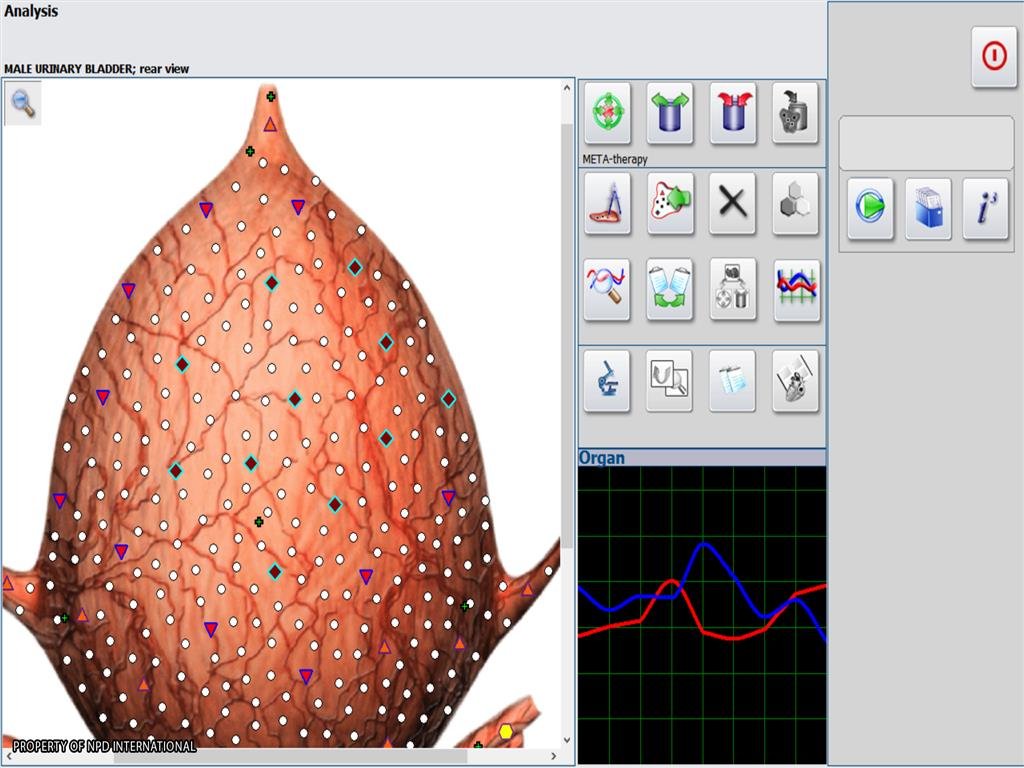
Equipment categorized under 3d nls diagnostics operates by analyzing spectral frequencies and informational signals associated with biological structures. These systems measure subtle electromagnetic responses to assess physiological stress levels, energetic balance, and homeostatic patterns across digital organ models. All generated data points reflect energetic status and educational information rather than pathological determinations.
Appropriate Wellness Uses
- Stress pattern evaluation across organ systems.
- Comparative monitoring of lifestyle adjustments.
- Educational visualization of anatomical models.
- Client energetic resonance tracking over time.
Operational Limitations
- Cannot deliver definitive clinical diagnoses.
- Cannot substitute for licensed physician testing.
- Cannot establish medication adjustments or cures.
- Cannot confirm underlying infectious pathology.
Buyers must understand that supplier statements such as recognizing or addressing microorganisms, tissues, and biochemical components describe internal software library references, known as etalons. These digital markers provide comparative baselines for informational bio-resonance tracking rather than medical validation. Practitioners and wellness studio operators must clearly present every reading as an educational reference rather than clinical medical advice.

Evidence Levels for NLS and Bioresonance Equipment
Evaluating non-linear analysis technology requires distinguishing between documented engineering specifications, historical biophysical hypotheses, and validated clinical evidence. Suppliers frequently reference historical research conducted by twentieth-century researchers such as Nikola Tesla, Georges Lakhovsky, Royal Rife, and Reinhold Voll regarding frequency interactions with biological tissue. While these historical frameworks form the theoretical basis for bio-resonance research, they do not constitute modern regulatory clearance or peer-reviewed clinical validation.
| Information Tier | Verification Status | Oerational Meaning |
| Factory Specs | Manufacturer Data | Documents voltage, port connectivity, and chassis build quality. |
| Spectral Etalons | Software Library | Provides reference frequencies for comparative mathematical analysis. |
| Accuracy Claims | Unverified Claim | Reflects software algorithm matching rather than clinical testing. |
| Medical Clearance | Regulatory Filing | Requires formal local agency clearance for medical claims. |

When reviewing literature that mentions a Non linear diagnostic system, buyers should note that manufacturer accuracy claims, such as ninety-five percent precision, describe digital database pattern-matching correlation rather than diagnostic sensitivity in human trials. No accuracy figure should be interpreted as medical reliability without published, randomized clinical evaluations conducted by independent third parties.
Verifying Model, Software, and Hardware Compatibility
A primary operational challenge when sourcing 3d nls diagnostics hardware involves mismatching physical control units with unauthorized or pirated software versions. Equipment running programs like Metapathia Hunter requires direct verification of the internal board configuration, USB communication dongles, and valid software encryption keys before integration.
The proprietary software supplied with these devices operates exclusively on Windows environments. The software supports Windows XP, Windows Vista, Windows 7, Windows 8, Windows 10, and Windows 11. It does not support Apple macOS, Linux, or Unix operating systems.
Distributors must verify that the host computer meets essential hardware requirements to prevent communication dropouts and driver crashes during testing sessions. Minimum computer requirements specified by the manufacturer include:
- Operating system: Windows 2000, XP, Vista, 7, 8, 10, or 11.
- Processor: at least 1 GHz Pentium III or modern equivalent.
- Random access memory: 512 MB minimum.
- Video card: SVGA High Color 1024×768 with at least 8 MB memory.
- Storage and connectivity: at least 1 GB free drive space, two USB ports, and optical media capability.
- Power source: uninterruptible power supply recommended for current stability.

Duplicated operating system entries in legacy supplier documentation should be clarified directly with technical support representatives. Sourcing managers should verify whether the provided drivers run natively on modern 64-bit platforms or require legacy 32-bit execution modes.
Hardware Configurations and Included Accessories
Purchasing orders for 3d nls diagnostics equipment can vary in physical configuration depending on whether the unit is packaged as an entry-level platform, a touchscreen model, or an advanced system like an 18D NLS device. Buyers should request a model-specific packing list and verified photographs of the boxed unit before release from the warehouse.
- Main machine host unit housed in a protective chassis.
- Headphone bio-inductor sensor with built-in trigger sensors.
- Shielded USB connection cable and auxiliary black connecting cables.
- Resonance testing cup for informational sample testing.
- USB software security dongle and installation DVD media.
- Heavy-duty aluminum transport case with form-fitting foam inserts.
Discrepancies often arise between different production runs regarding the inclusion of specialized optical sensors, touch displays, or secondary testing chambers. Verifying the physical packing slip against commercial invoices prevents operational downtime when opening shipments.
Procurement teams should document the serial numbers on both the main hardware unit and the security dongle. Software tied to a physical dongle cannot run if the key is lost or damaged in transit, making clear replacement terms essential during contract negotiations.
Safety, Regulatory Boundaries, and Practical Limitations
The global regulatory status of bio-resonance hardware varies significantly between regional jurisdictions. In the United States, commercial entities must avoid misbranding devices as medical instruments. Equipment classified by overseas manufacturers as Class II biochemical analysis systems must still comply with domestic marketing rules, which restrict commercial wellness technology from advertising treatment or medical diagnostic functions.
Device demonstrations, client reports, and informational readings are intended solely for wellness management and educational reference. They must never replace professional medical diagnosis, laboratory testing, or physician-directed treatment plans.
Practitioners integrating frequency technology into functional wellness, ozone, detoxification, and longevity practices must implement strict operational boundaries. Overinterpreting software readouts risks client anxiety and potential regulatory action against the facility. Formal Training helps staff understand signal parameters, preventing unsupported statements regarding illness or physiological pathology.


Operational safety also requires managing electrical safety and data privacy. Devices powered via 5-volt USB connections draw minimal current, but facilities must protect client session records in compliance with applicable regional privacy and digital record-keeping standards.
Supplier Verification Checklist for 3D NLS Diagnostics
Before transferring funds to overseas suppliers, commercial buyers and regional Distributors must conduct thorough due diligence. Verifying physical hardware production, software integrity, and business legitimacy protects investments and maintains commercial viability.
- Request photographic proof of the physical chassis showing model numbers and factory markings.
- Verify exact software titles and patch versions to avoid legacy or unlicensed builds.
- Confirm operating system compatibility, driver architecture, and USB dongle requirements.
- Obtain written confirmation of the exact warranty duration, resolving any one-year or two-year discrepancies.
- Review shipping terms, Incoterms, damage-in-transit liability, and customs brokerage responsibilities.
- Verify the legal identity, business registration, and direct contact details of the manufacturing company.
- Check local regulatory, import, and commercial advertising restrictions for non-medical wellness devices.
- Conduct a live video demonstration of the operational hardware and software prior to final dispatch.
Following this checklist helps buyers confirm whether they are dealing directly with an authentic manufacturer or an unverified trading intermediary. Direct communication with technical staff also clarifies available language packs, including English, German, Russian, Chinese, Spanish, French, Italian, and Polish versions.
Technical and Commercial Specifications Reported by MAIKONG
The manufacturing specifications provided by Shenzhen MAIKONG Technology Co., Ltd. for model MK-4025 provide baseline parameters for commercial evaluation. While factory materials list capabilities like Metatron 4025 architecture, multidimensional virtual scanning, and digitized spectral etalons, buyers must review these data points as supplier-reported specifications.
| Specification Field | Reported Parameter | Buyer Verification Action |
| Model Number | MK-4025 | Match model stamping against shipping papers. |
| Operating System | Windows Platform | Confirm Windows 10 and 11 driver stability. |
| Internal Generator | 4.9 GHz | Request technical documentation on output levels. |
| Power Input | 5V via USB | Inspect included power filtering and shielding cables. |
| Reported Etalons | 4025 Processes | Verify active software database entries upon delivery. |
| Warranty Period | 1 to 2 Years | Define exact coverage duration in the written order. |
Commercial buyers should note that vendor literature contains varying statements regarding warranty lengths, with references ranging between one, two, and three years depending on contract tiers. Clarify in writing whether replacement parts, technical support response times, and return freight costs are included in the negotiated purchase order.
Factory production capacity is reported at 3,000 units per month, with standard dispatch occurring between one and five business days following payment receipt via wire transfer, Western Union, or PayPal. Original equipment manufacturing (OEM) and custom branding options generally require minimum order quantities of 200 pieces.
Frequently Asked Questions About 3D NLS Diagnostics
What are 3D NLS diagnostics?
Systems designated under this category are bio-resonance instruments designed to measure electromagnetic frequency responses across digitized anatomical models. They provide comparative informational data for stress assessment and wellness education rather than clinical medical testing.
Does 3D NLS diagnostics provide a medical diagnosis?
No, these instruments do not diagnose, treat, prevent, or cure medical conditions. All software readings represent informational bio-feedback indicators intended solely for lifestyle and wellness reference under qualified operational guidelines.
How can buyers verify a 3D NLS model and software match?
Buyers should request live video demonstrations showing the physical host unit, its internal hardware boards, the serial-matched USB security dongle, and the active software interface. Confirming driver functionality directly with technical personnel prevents receiving outdated or unlinked configurations.
Does MAIKONG software support macOS, Linux, or Unix?
No, the proprietary software operates exclusively on Microsoft Windows operating systems from Windows XP through Windows 11. It does not provide native support for macOS, Linux, or Unix environments.
What should be included in a 3D NLS equipment quotation?
A formal quotation should specify the exact host model, software name and build, accessory inventory, shipping Incoterms, and explicit warranty duration. Buyers should also ensure the invoice identifies technical support channels and return terms for transit damage.
What warranty information should a distributor confirm?
Distributors must confirm whether the warranty period covers one, two, or three years, as factory literature cites different terms. The written agreement should define who pays for replacement shipping, how defective parts are processed, and what exclusions apply to physical damage.
Can MAIKONG provide OEM, ODM, training, and local-language support?
Yes, factory services include custom logo branding, custom packaging, technical setup support, and multiple software language versions. Custom packaging and branding options typically require a minimum order volume of 200 units.
Where can a buyer request technical documentation or a live demo?
Prospective purchasers can contact MAIKONG customer service via email at Lucy@ihunter4025.com or via WhatsApp at 008613-51090-74-01. Technical teams provide direct equipment specifications, software overviews, and live hardware demonstrations upon request.
Summary and Practical Verification Steps
Procuring reliable non-linear assessment technology requires careful technical validation, clear regulatory separation between wellness data and clinical medicine, and firm contractual clarity on warranty terms. Verifying computer operating system compatibility, software security dongles, and physical accessory lists protects practices and distribution networks from unexpected downtime. Direct communication with factory representatives establishes verified commercial agreements and ongoing technical support.
Verify Device Specifications and Software Compatibility
Establish direct communication with technical support to review hardware configurations, verify operating system drivers, or schedule an interactive live system demonstration.