Metatron hunter 4025 nls Supplier

3D NLS Health Analyzer Manual PDF: Setup, Verification, and Operating Protocols

3d nls español manaul from 3d-nls-health-analyzer
3d nls health analyzer manual pdf
3D NLS-GRAPHY AT FULL-SCALE STUDY OF THE WHOLE BODY IN PATIENTS WITH METASTATIC BRAIN AFFECTION
A legitimate 3d nls health analyzer manual pdf provides the baseline technical schematics, software installation sequences, and operational steps required to configure bioresonance testing instrumentation. Operators must confirm that the manual version matches the exact device firmware, USB dongle encryption, and Windows operating system release before executing system setup. Equipment in this category is engineered strictly for lifestyle tracking, stress evaluation, and educational reference, and cannot replace professional medical diagnosis or clinical assessment.
Hardware stability and measurement accuracy depend on systematic physical inspection, proper peripheral placement, and compliant PC interface configuration. Discrepancies between installed driver versions and user manual steps represent the leading source of communication failure during bio-energetic assessment sessions.

Essential Contents of the 3D NLS Documentation
Standard operating documentation outlines the operational boundary conditions, safety precautions, and peripheral port assignments necessary for daily work. A genuine manual details software navigation menus, client record database creation, and informational spectrum etalons.
Supplied manufacturer literature outlines historical principles dating back to the electromagnetic field research of Nikola Tesla, Georges Lakhovsky’s radiofrequency biological studies, Royal Rife’s bio-field frequencies, and Reinhold Voll’s electroacupuncture point testing. Modern systems adapt these concepts into computer graphic models of 1432 organs and tissues to observe energetic balance. Facilities focusing on longevity programs, ozone protocols, wellness clinic evaluation, anti-aging routines, and detox tracking utilize these reference models to monitor client bio-energetic shifts over successive visits.
Documentation labels citing research accuracy figures, such as 95%, reflect factory theoretical benchmarks rather than clinically validated outcomes. Operators should treat all graphical data and spectral etalons as non-medical reference points for wellness management.
When reviewing documentation for related systems like the Metatron 4025, operators must examine the listed software title, such as Metapathia Hunter, to confirm functional correspondence. The user manual must specify whether the device configuration supports multi-dimensional scanning, informational wave transfer via resonance testing cups, or comparative spectral analysis.
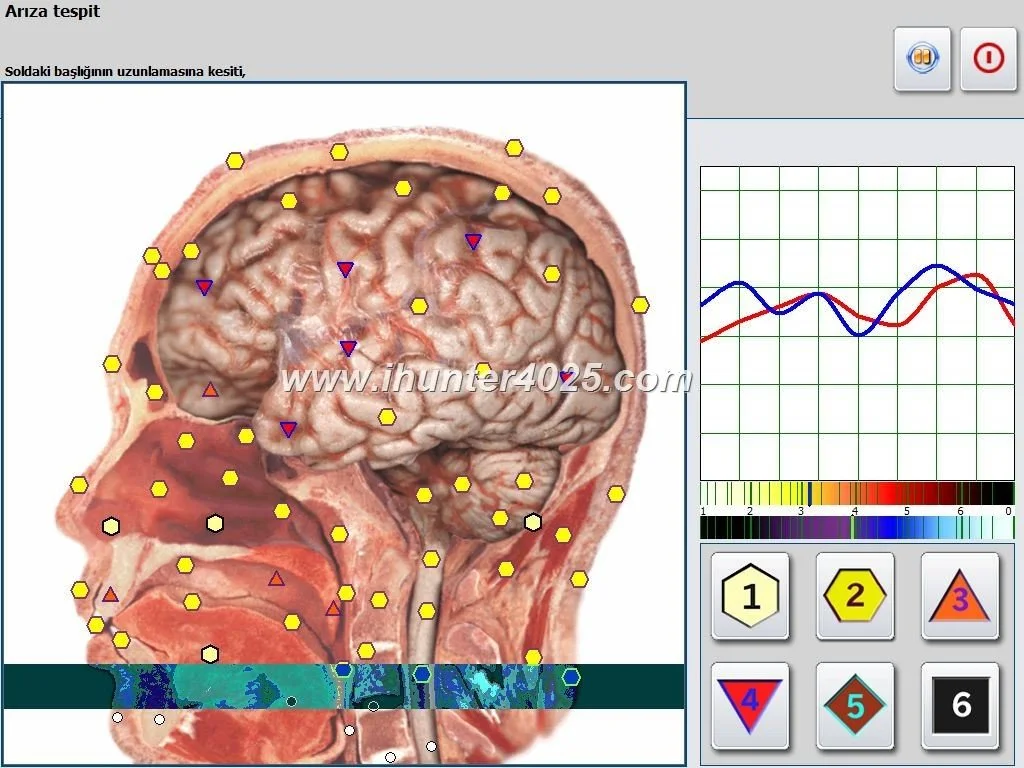
Matching software interface diagrams with the manufacturer manual prevents misconfiguration during client profile setup.
Workstation Requirements and Hardware Configuration
Proper operating system compatibility prevents driver rejection and software execution stalls during bioresonance data processing. The software platform supports Windows environments exclusively and cannot execute on Apple macOS, Linux, or Unix architectures.
Facilities preparing workstations for the system must review base hardware specifications to accommodate processing requirements during high-speed scans. The table below outlines the core computing specifications and technical attributes listed in factory source materials.
| Parameter | Factory Specification | Deployment Consideration |
| Supported OS | Windows XP to 11 | Verify 32-bit versus 64-bit driver support directly with the manufacturer. |
| Processor | 1 GHz or higher | Modern multi-core processors reduce virtual graphic loading delays. |
| System RAM | 512 MB minimum | Higher memory capacity supports smoother client database backups. |
| Storage Space | 1 GB free space | Reserve additional drive space for longitudinal assessment records. |
| Input Ports | Two USB ports | Requires separate ports for main console connection and license security dongle. |
| Power Source | 5V via USB | Current consumption reaches up to 300 mA through host computer connection. |
While factory references include legacy environments like Windows 2000, Vista, Windows 7, and Windows 8, newer installations on Windows 10 and Windows 11 require checking administrative privileges and driver digital signature rules. Technicians must verify port power delivery, as passive USB hubs can drop connection with the main console during scanning.
Step-by-Step Operator Workflow and Training Scope
Operating a bioresonance system requires strict adherence to physical setup sequences to preserve signal clarity between the bio-inductor headset and the processing unit. Staff training must cover connection integrity, software authentication, and disciplined data cataloging.
- Inspect the aluminum carrying case and verify contents against the packing list, including the main console, bio-sensor headset, testing cup, blue USB interface cable, black connecting cables, software disc, and USB security dongle.
- Connect the blue USB cable directly to a rear USB port on the workstation and insert the security dongle into an adjacent active port before opening the software application.
- Link the bio-inductor headphone light sensor and the testing cup to the front panel using the black high-grade connection cables.
- Launch the software, register the client demographic profile in the wellness registry, and ensure the sensor headset sits comfortably across the subject’s temporomandibular zone.
- Initiate scanning protocols, allowing the 4.9 GHz internal generator to complete signal collection at an average scan time of 2 seconds per model.
- Archive scanning reports for educational reference and disconnect peripherals using standard operating procedures.

Correct placement of sensor components helps maintain signal transmission during non-linear comparative sessions.
Formal instruction programs prepare operators to navigate advanced modules such as entropy analysis, vegeto-tests, and spectral etalon comparisons without misinterpreting non-medical indicators. Structured training is recommended for wellness studio operators, corporate wellness procurement teams, holistic consultants, and equipment technicians maintaining 8D NLS or 9D NLS installations.
Structured Operator Instruction and Equipment Onboarding
In-depth technical orientation prepares practitioners and facility staff to navigate interface controls, calibrate sensors, and handle data archiving efficiently.
Fault Prevention, Diagnostics, and Supplier Verification
Communication faults between the bioresonance console and workstation software represent the most common operational setback. Routine diagnostic procedures resolve peripheral recognition drops and missing driver alerts.
Do not open the aluminum enclosure or attempt internal repairs. Unauthorized tampering invalidates manufacturer warranty policies and risks damage to internal quantum generator boards.
If the software reports hardware missing, close the application, remove the USB dongle, reconnect the console to an alternative root USB port, and inspect Windows Device Manager for unrecognized COM ports. Faulty black connecting cables between the main box and headphone light sensor will disrupt bio-signal acquisition.
Buyers evaluating alternative equipment platforms like OBERON NLS or an advanced 18D NLS must scrutinize warranty agreements before issuing purchase orders. Factory source literature presents conflicting coverage statements spanning 1-year, 2-year, and 3-year warranty windows. Buyers must insist on a formal written warranty statement specifying coverage dates, part replacement obligations, and service handling before delivery.
Logistics documentation must account for standard transit safeguards. Units ship from Shenzhen, China, packed in export standard wooden boxes or cartons with gross dimensions of 42 by 40 by 20 centimeters. Buyers should inspect shipping packaging upon arrival via DHL, UPS, TNT, or FedEx, reporting transit damage immediately to the carrier. Facilities ordering custom OEM or ODM branding must verify the minimum order quantity of 200 pieces for customized logos and specialized exterior packaging.

Carefully checking the physical packing list protects against missing peripheral components prior to clinic installation.
Frequently Asked Questions About 3D NLS Manuals and Operation
Does the 3D NLS manual apply identically to every Metatron model?
Operating manuals differ across hardware revisions, sensor configurations, and software releases. While basic connection protocols share common traits, devices like the Non linear diagnostic system use unique software menus and etalon databases that require model-specific instructions.
Can the 3D NLS software operate on Apple macOS or Linux workstations?
The operating software is coded strictly for Microsoft Windows environments and will not operate natively on macOS, Linux, or Unix systems. Attempting to run the interface via non-standard operating system emulators frequently causes USB license dongle authentication failures.
Which Windows versions are compatible with the hardware?
Manufacturer technical specifications support Windows XP, Vista, Windows 7, Windows 8, Windows 10, and Windows 11. Facilities should confirm 32-bit and 64-bit driver availability directly with technical support before deploying updated operating systems.
What physical items must be present in the standard factory package?
A standard package includes the main analyzer machine, one headphone sensor, one blue USB interface cable, two black connecting cables, one testing cup, one USB software dongle, DVD software, and an aluminum transport case.
How can buyers verify device authenticity and software legitimacy?
Buyers should cross-reference hardware serial plates with factory batch numbers, inspect the USB dongle encryption type, and confirm official software language versions directly through MAIKONG. Legitimate devices include comprehensive multilingual software supporting English, German, Russian, Chinese, Spanish, French, Polish, and Italian.
What scope of operator training is required before conducting client sessions?
Operators must complete practical training covering peripheral cable inspection, client database administration, scanning execution, and non-medical reporting ethics. Hands-on orientation helps technicians avoid common operational errors and preserve hardware integrity over long-term use.
What duration and conditions apply to the equipment warranty?
Written warranty coverage terms range from 1 to 3 years across factory documents, making written confirmation essential at the time of purchase. Standard terms exclude transit damage, unauthorized chassis disassembly, and environmental extremes.
Can the 3D NLS system be utilized for clinical medical diagnosis?
The instrumentation is designed strictly for bio-energetic assessment, stress monitoring, and lifestyle research, and cannot perform medical diagnosis or treatment. All graphical output and comparative spectral values serve solely as educational and wellness reference points.
Professional Integration and Technical Inquiries
Standardizing system deployment through official documentation safeguards bioresonance hardware investments and maintains consistency during wellness tracking workflows. Technicians and clinic owners must verify software driver versions, confirm written warranty terms, and complete systematic operational instruction. Practitioners expanding service capabilities to include 8G TCM or advanced resonance systems can establish direct communication with MAIKONG technical specialists to verify compatibility terms and receive verified documentation.
Request Official Manuals and Wholesale Distribution Terms
Connect with technical representatives to verify software compatibility, obtain authorized user documentation, or apply for commercial distribution partnerships across the United States.