Can the Biophilia Intruder NLS Screen Bacteria and Viruses Quickly? A Practical Guide for U.S. Wellness Center Owners · body
Quick answer
We can summarize the practical takeaway for U.S. wellness center owners in one paragraph: a Biophilia-style NLS (Metatron-style) device can produce fast bioresonance “flags” that suggest the presence, susceptibility or energetic signature of listed bacteria, viruses and other microorganisms, and it can be used as a rapid screening aid during intake and triage. However, these outputs are not equivalent to laboratory detection (culture, PCR, antigen tests) and cannot be used as a stand-alone medical diagnosis under U.S. clinical standards. Use the device as an adjunct screening tool—document consent, follow an internal triage protocol, and order confirmatory laboratory testing when the device flags pathogens of concern or when clients have compatible symptoms or risk factors.
Contents
What practitioners mean by “Biophilia Intruder NLS” and how it relates to Metatron-style NLS devices
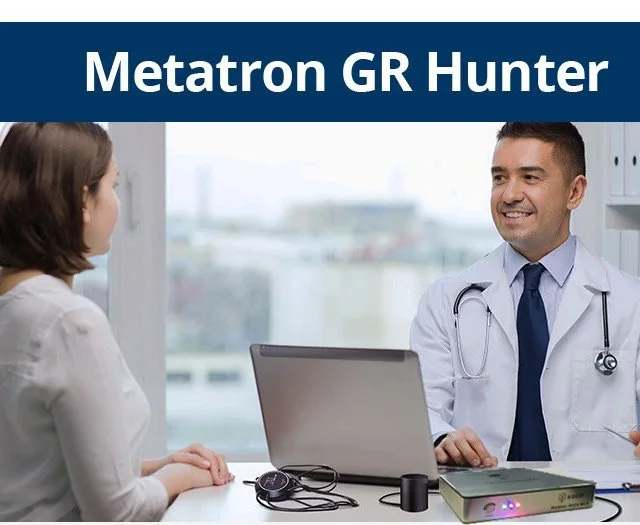
When colleagues say “Biophilia Intruder NLS” they are typically referring to a non-linear diagnostic system (NLS) that applies bioresonance/biofeedback scanning to detect imbalances correlated to organs, toxins and a database of microorganisms. These devices share core features with the Metatron-style product family: a software-driven database of etalons (reference signatures), hand or electrode sensors, and an algorithm that compares client scan data against stored patterns for organs, pathomorphology and microorganisms.
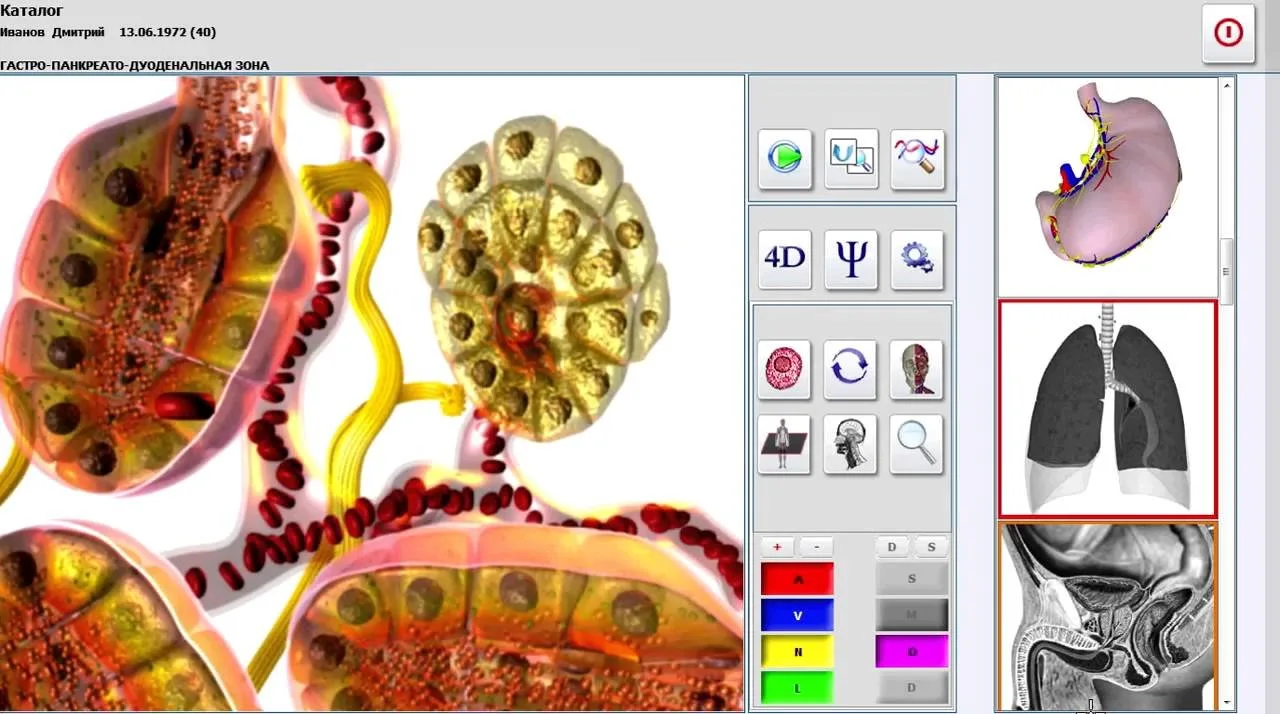
For decision-making, treat “Biophilia Intruder” as part of the broader Metatron-style category: fast screening, visually driven reports (images with an epicrisis), and a built-in microorganism library are typical. The outputs are best thought of as probabilistic flags or indicators of energetic correlation—not direct molecular detection.
Company-recorded technical snapshot you must know
Below are the supplier-recorded technical points we rely on when advising centers. These are company-provided product facts for the Metatron Hunter 4025 family and related Metatron-style devices; we preserve the exact terms and values as reported by the manufacturer and identify the internal record we used.
Feature
Reported value
Comparison Software
Hunter
Scanning method
Auto 3-D Spiral Scanning and Biological resonance scanning
Scanning speed
Fast
Number of microorganisms and helminths in library
171
Number of organs
886
Report format
Images with Epicrisis
Software / supported systems
Hunter (2026); Windows 11, Windows 10, Windows 8, Windows 7
MOQ / Lead time / Warranty
1 PCS / 2–5 days lead time / 1 year warranty
Note: the “accuracy” figure and microorganism library size are supplier declarations. They document the device’s stated scope but are not regulatory validation of clinical diagnostic performance in U.S. settings.
What an NLS bioresonance session typically reports about bacteria and viruses
The usual outputs you will see on the Metatron-style software are:
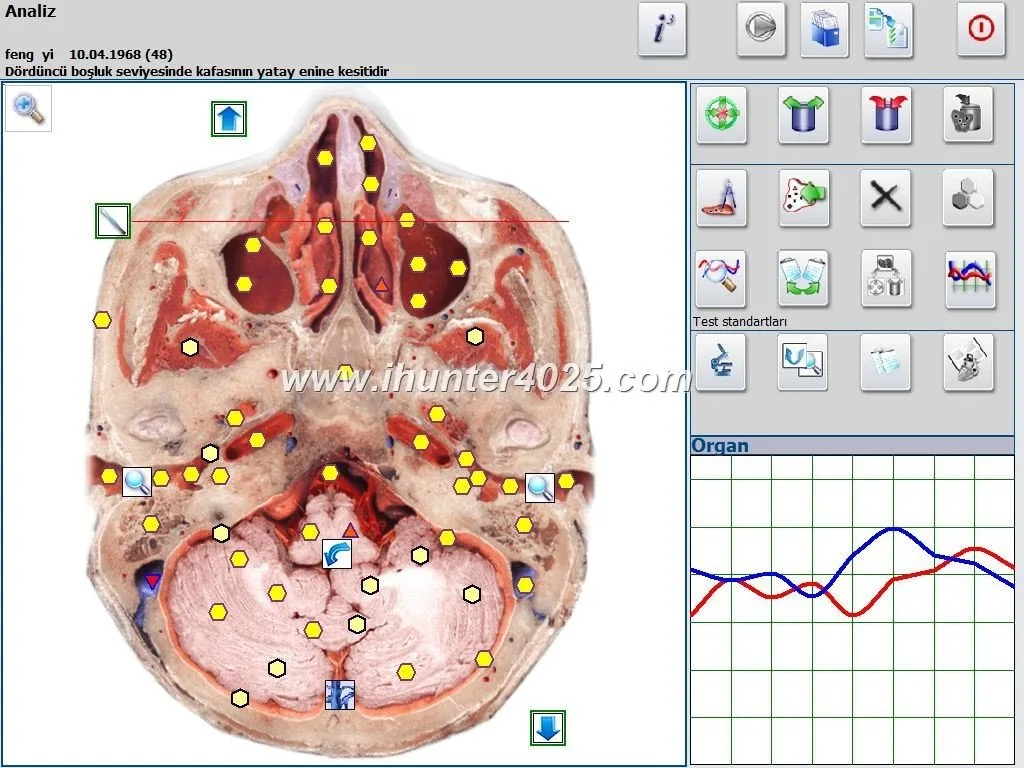
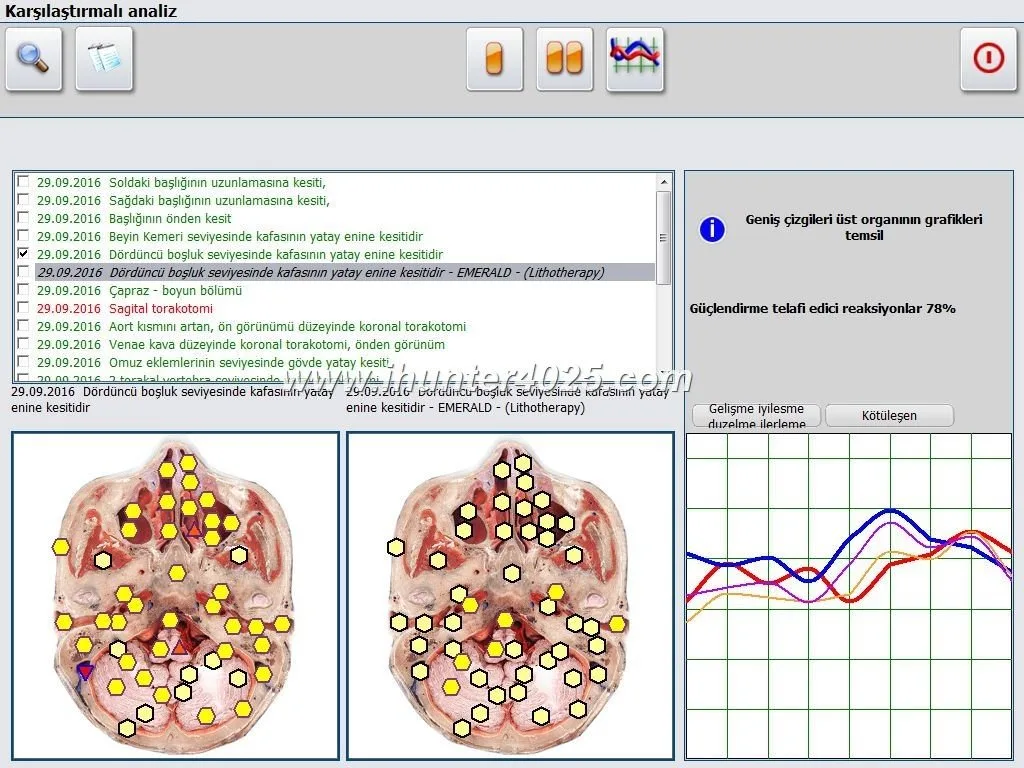
Visual organ maps and spectrogram-like images.
Lists or “flags” of microorganism etalons (the database match), often grouped by type (bacteria, virus, fungus, parasite).
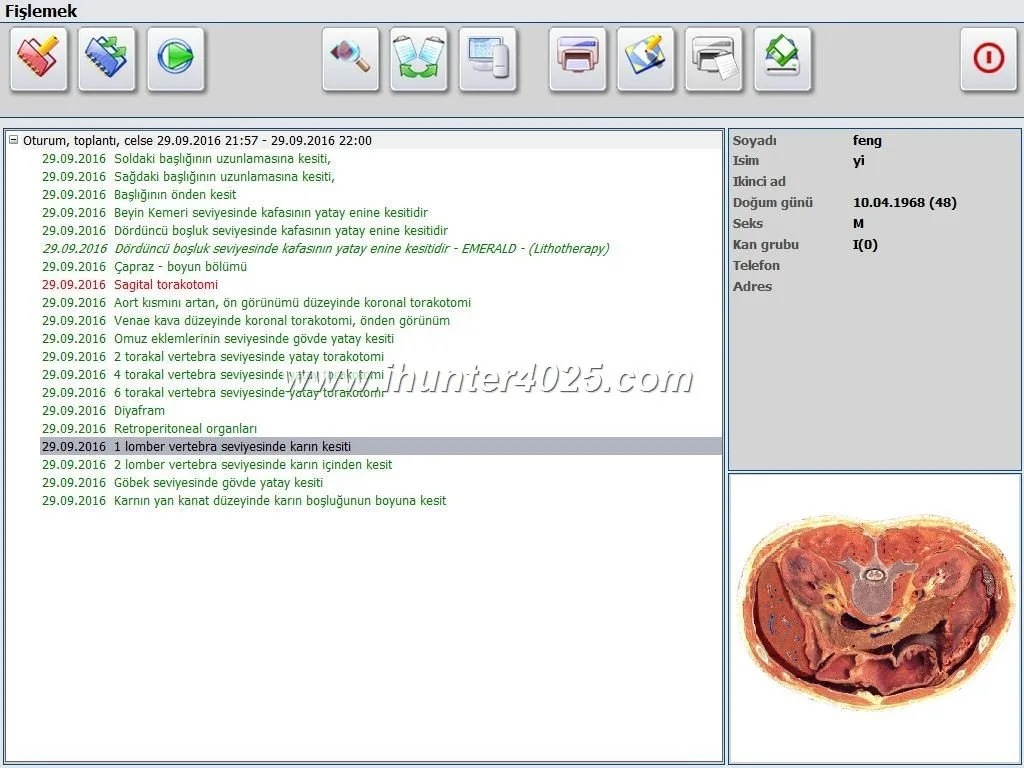
Severity or susceptibility indicators (software-specific scoring), and an epicrisis summary image or PDF.
Suggested remedies or therapeutic entries from the etalon lists (homeopathy, nutraceuticals) depending on the software configuration.
Reports are image-heavy and designed to support practitioner interpretation rather than replace lab data. The device holds a library of 171 microorganism/helminth etalons in the reported configuration; when a client pattern correlates to a stored etalon the software shows that entry with ancillary text.
What NLS outputs can and cannot be used for in a U.S. wellness center — realistic limits
Can the Biophilia Intruder NLS Screen Bacteria and Viruses Quickly? A Practical Guide for U.S. Wellness Center Owners · body
What you can reasonably use these outputs for
Rapid screening during intake to identify clients who may need conventional microbiological testing or physician referral.
Prioritizing clients for follow-up testing when clinical symptoms, exposure history or risk factors are present.
Supporting documentation of a client’s baseline energetic profile for wellness planning (non-diagnostic use).
Internal monitoring: tracking relative change in a client’s NLS profile over serial visits (as long as you clearly label it non-diagnostic).
What you must not do with NLS outputs
Do not claim the device “detects” or “diagnoses” infections in place of laboratory methods (culture, PCR, antigen tests). That is outside the device’s recorded scope and U.S. clinical standards.
Do not use a single NLS flag to start or stop prescribed medical treatments, antibiotics or antiviral therapy.
Avoid wording in client reports that implies a definitive microbiological result—use neutral language like “NLS-indicated correlation” or “bioresonance flag.”
Practical workflow: using a Biophilia-style NLS for fast screening in intake and triage
Can the Biophilia Intruder NLS Screen Bacteria and Viruses Quickly? A Practical Guide for U.S. Wellness Center Owners · body
Below is a clinic-ready workflow you can adapt to your policies. We focus on practical steps you can adopt immediately; we do not prescribe medical treatments.
Pre-visit setup
Install and test the Hunter software on a supported Windows system. Make sure the system image, epicrisis export and printer functions work.
Prepare a one-page consent form that explains the device is a non-diagnostic screening aid and documents client acceptance of the process.
Train at least two staff members on a standard operating procedure (SOP): connection, scan execution, report export, documentation and referral criteria.
Obtain signed consent that states the device is a screening aid (non-diagnostic) and that confirmatory lab testing may be required.
Perform the NLS scan using hand sensors or the clinic’s configured hardware and the Auto 3-D Spiral scanning mode.
Export the image-based report (epicrisis) and review microorganism flags with the trained practitioner.
Triage based on combined assessment: NLS flags + clinical history + symptom severity = action (monitor, recommend lab testing, urgent medical referral).
Document the NLS finding in the client record, including the exported image report and the rationale for any referrals or testing orders.
Keep the SOP concise so staff can follow it under time pressure. For centers that wish to use NLS as a routine intake filter, place the scan after history but before treatment scheduling so you can factor results into the care plan.
Interpreting microorganism results: reading “flags” and when to order laboratory testing
Can the Biophilia Intruder NLS Screen Bacteria and Viruses Quickly? A Practical Guide for U.S. Wellness Center Owners · body
The device returns a match score or flag for an etalon microorganism. The right action depends on the microorganism flagged, the client’s clinical picture, and the potential consequences of missed infection.
How to read common outputs
“Flag” or “match” — an energetic correlation between scan and the stored etalon. Treat as hypothesis-generating, not confirmatory.
Severity indicators — software may show a degree of deviation. Use this as relative information, not an absolute infection stage.
Multiple organism results — when a report lists several microbial etalons, consider whether any correspond to likely pathogens for the client’s symptoms.
When to order confirmatory lab testing
Order traditional laboratory testing whenever one or more of these apply:
The device flags known pathogenic bacteria or viruses associated with the client’s symptoms (fever, respiratory compromise, gastrointestinal distress, etc.).
The client is high risk (pregnant, elderly, immunocompromised) and any microbial flag appears.
There is a public health implication (reportable disease, potential outbreak) or the client’s work/living situation requires definitive clearance.
The client requests definitive confirmation before starting any clinical medication or invasive therapy.
In short: treat NLS flags as a trigger to escalate to gold-standard testing when clinical stakes are significant.
Comparing fast screening value vs. gold-standard lab tests — strengths, weaknesses and complementary use
Can the Biophilia Intruder NLS Screen Bacteria and Viruses Quickly? A Practical Guide for U.S. Wellness Center Owners · body
Strengths of Biophilia/Metatron-style fast screening
Speed and convenience—scan results are immediate and provide a visual basis for triage.
Non-invasive and repeatable with minimal client burden.
Broad scope—organ maps and a microbiological etalon library allow simultaneous multi-system screening.
Weaknesses and risks
Outputs are correlational and algorithm-dependent; they do not measure nucleic acid or viable organisms.
Supplier-reported “accuracy” (95%–98%) is an internal performance claim and should not be treated as regulatory validation for diagnostic use in the U.S.
Potential for false positives and false negatives; overreliance can lead to unnecessary anxiety or delayed appropriate care.
Complementary use in clinic
The most responsible model is complementary: use rapid NLS scanning for initial filtering and business workflow efficiency, and rely on laboratory methods for confirmation and medical decision-making. The NLS report becomes part of the intake dossier that helps prioritize lab orders and physician referrals.
Operational checklist before you run fast pathogen screening in your center
Before you add Biophilia-style NLS screening to intake, verify these operational items:
Software and OS compatibility: confirm Hunter software version and supported Windows platforms (Windows 7/8/10/11 are reported supported; validate the specific build against your systems).
Training: at least one practitioner trained in SOP for scanning, report interpretation and documentation. Train front-desk staff in consent and triage flags.
Consent and client information materials: ready-made language to explain non-diagnostic purpose and referral thresholds.
Liability and documentation processes: integrate NLS reports into client records and set explicit referral triggers.
Logistics: sufficient computer hardware, printer and clean sensor maintenance. Confirm warranty and spare parts availability (company reports 1 year warranty and lead times of 2–5 days for supply).
Language and support: if you need software in a non-English language or local technical support, request this at quotation—supplier materials indicate multi-language support and software customization may be offered on inquiry.
Electrical and installation: the supplier documentation lacks verified U.S.-specific electrical/installation details—confirm local compliance before purchase.
How to explain results to clients ethically—scripts and documentation tips
Keep explanations plain, factual and non-alarmist. Use consistent language that reflects the device’s role and your clinic’s pathway for confirmatory testing.
Suggested client script (brief)
“We ran a non-invasive screening that looks for energetic patterns sometimes associated with certain microorganisms. This is not a laboratory test. Your report shows a [low/moderate/high] flag for [organism group]. Because you also reported [symptom or risk], we recommend we send a conventional lab test/arrange a physician consult to confirm and decide next steps. If you prefer, we can arrange the sample collection and forward the results to your doctor.”
Documentation checklist
Attach exported epicrisis images to client file.
Record what advice you gave, whether lab testing was recommended, and any referral contact.
Keep signed consent forms for the scan on file.
When a positive NLS flag should trigger medical referral or conventional testing
Escalate to conventional testing or medical referral when any of the following occur:
Flags for pathogens known to cause acute disease matching the client’s symptoms (respiratory pathogens with shortness of breath, gastrointestinal pathogens with severe diarrhea, etc.).
Client is in a high-risk group (pregnant, immunocompromised, elderly, very young).
Multiple flags align with a clinical deterioration or alarm signs (fever over clinic thresholds, hemodynamic instability, oxygen desaturation).
There is occupational or public-health need for a definitive test (healthcare workers, school/daycare outbreak concerns, reportable disease suspicions).
If in doubt, advise the client to obtain physician evaluation and confirmatory laboratory testing. The NLS result should be recorded, and the clinic’s referral chain followed. We emphasize that relying solely on NLS flags for critical decisions risks missed diagnoses or inappropriate care.
Comparative practical checklist — what to ask a supplier before you buy
These are concrete questions that will determine whether the device fits your clinic workflow:
Which software version will be delivered and which Windows builds are officially supported for that version?
Can we get the software user manual and a sample epicrisis report before purchase?
What exactly does your “accuracy 95%–98%” statement mean (tested against what dataset, in what conditions)?
Do you provide U.S.-localized installation instructions and power/plug adapters for compliance with local electrical codes?
Is there local or remote training for practitioners, and is it included in the price or quoted separately?
Warranty specifics, spare part availability, and typical lead times for service in the U.S.?
Can the software export reports in PDF and integrate them into our electronic records system?
FAQ for wellness center owners about implementing Biophilia Intruder / Metatron-style screening
Does the device replace PCR or culture tests?
No. The NLS provides rapid screening indicators and cannot replace laboratory molecular or culture testing used for diagnosis and public-health decisions.
Can we advertise “pathogen screening” in our clinic marketing?
You can advertise a non-invasive screening service, but your materials must not claim diagnostic capability or imply lab-equivalent detection. Use transparent wording: “bioresonance screening—non-diagnostic; confirmatory testing recommended when indicated.”
Are the microorganism etalons fixed or updatable?
Supplier software typically includes a database of etalons (the supplied record lists 171 microorganism/helminth entries). Ask the supplier about database updates and how they are delivered—this is important if you expect new etalons or software patches.
What happens if the device flags a serious pathogen but the client is asymptomatic?
Treat this as a candidate for confirmatory testing if the client is high-risk or if the flagged agent is typically clinically significant. For low-risk clients, document the finding, advise monitoring and recommend follow-up testing if symptoms develop.
Suitability scenarios — where fast bioresonance screening adds value
High-volume wellness clinics that want a rapid, non-invasive triage step before offering lab referrals.
Centers focused on preventive wellness and serial monitoring of clients who consent to non-diagnostic energetic profiling.
Clinics offering integrated programs (nutrition, supplements, lifestyle) where an NLS flag informs individualized wellness pathways—subject to clear documentation that clinical confirmation may be required for medical treatment decisions.
These are possible applications, not validated clinical outcomes.
Operational costs and procurement notes
The supplier reports an MOQ of 1 PCS, lead time 2–5 days and a 1-year warranty for the Metatron Hunter 4025 family. Pricing is available on inquiry; ask suppliers to include training, software licence terms, and a breakdown for hardware, export documentation and optional on-site installation.
Ethical and legal considerations for U.S. wellness centers
Maintain transparent documentation, avoid diagnostic claims in advertising, and ensure any referral to conventional medicine is prompt when clinical signs or flagged pathogens justify it. Confirm that your center’s liability coverage and local regulations permit the use of NLS devices for screening; if uncertain consult legal counsel.
Final technical caveats and missing information you should verify
The device data we used are supplier-supplied values (software “Hunter”, library counts, claimed accuracy and supported Windows systems). The following items are not provided in the available supplier snapshot and therefore must be verified before deployment in the U.S.:
Any U.S.-specific electrical certification, installation requirements or local safety compliance documentation.
Independent clinical validation studies comparing NLS outputs to molecular or culture results in relevant populations.
Precise definition and methodology behind the “95%–98% accuracy” claim.
Absence of this information should narrow your operational claims and increase your emphasis on confirmatory testing pathways.
Optional: where to read more on the Metatron family
For product pages and technical imagery of the Metatron Hunter 4025 that we reference in our product documentation, see our Metatron Hunter 4025 information page on the company website.
We aim to help wellness center owners evaluate how a Biophilia-style NLS can fit responsibly into clinical workflows. If you’d like a sample SOP, sample epicrisis report or to discuss U.S. distribution opportunities, email Lucy@ihunter4025.com or message us on WhatsApp at https://wa.me/861351090701.
We also welcome inquiries from potential U.S. distributors interested in local marketing, training and after-sales service.
This article is for general information only, not a substitute for professional medical diagnosis or treatment, and it is not intended as medical advice.
This content is provided for learning, information sharing and professional communication only. It is not medical advice and is not a basis for treatment or diagnosis. Confirm suitability, operation and purchasing requirements against the product manual, local regulations and qualified professional guidance.
If you want a tailored quotation, US configuration details or to discuss becoming a U.S. distributor, contact us and specify your intended clinic workflow, expected scan volume and any required software language or integration. We can send sample epicrisis reports and a more detailed SOP template on request.