Categories
- Knowledge and help (92)
- Blog (284)
- Oberon (12)
- bioplasm nls (14)
- Diacom nls (20)
- Metatron Hunter 4025 NLS review (41)
- Metatron Hunter Manual (7)
Short answer: Yes—health coaches in the United States can use a device like the comparable provider Low Level Laser Therapy Watch as a wellness adjunct in coaching practice, but only with clear limits. The device is presented by the manufacturer as a wearable red-light (650 nm) low-level laser tool for non-prescription wellness uses such as stress/anxiety support, sleep/mood adjuncts and post-exercise recovery. Before you introduce it to clients, confirm the model’s regulatory and safety documentation with the supplier, obtain clear client consent, screen for conditions or medications that a manufacturer manual lists as exclusions, avoid medical claims, and track outcomes with objective measures you already use (blood pressure cuffs, sleep logs, validated questionnaires). Contact the supplier to request the device manual, certification copies and software compatibility before any purchase or clinical use; we list a direct contact at the end of this article.
Our overview draws on the manufacturer’s publicly available product text describing the comparable provider Low Level Laser Therapy Watch and its stated application areas, which list a red laser at 650 nm and use for stress, fatigue, anxiety, tension, rapid heartbeat, high blood pressure, seasonal affective disorder, low motivation and insomnia (company product material). Where we summarize those application areas or wording, we preserve the supplier’s phrasing and scope rather than treating it as an independently verified clinical finding. The specific product name and wavelength reference above come from that supplier material. See the contact section to request the original manual and claims documentation from the supplier for the exact model you consider.
We do not have independent regulatory or clinical verification of the comparable provider watch’s safety profile, FDA status, or specific contraindication list. Manufacturer declarations such as ISO 9001 and CE are company‑reported; CE marks are a European market compliance indicator and do not imply U.S. regulatory clearance. A wearable laser is a device that emits optical energy; improper use or unsupported medical claims could expose you to legal or professional risk. Always obtain the device manual and safety data from the supplier and, where the client has a medical condition, consult or refer to a licensed clinician.
In plain terms: yes, you can incorporate this kind of wearable low-level laser device into coaching work as a non-medical adjunct for wellness-focused clients—provided you do three things first. One, verify the device’s technical and safety documentation with the supplier and keep those records. Two, obtain explicit informed consent that frames the device as an adjunct, not a medical treatment, and document screening and escalation steps. Three, avoid diagnosing or treating medical conditions and refer clients with significant or uncontrolled medical problems to licensed providers. These steps protect clients and keep your scope of practice clear.
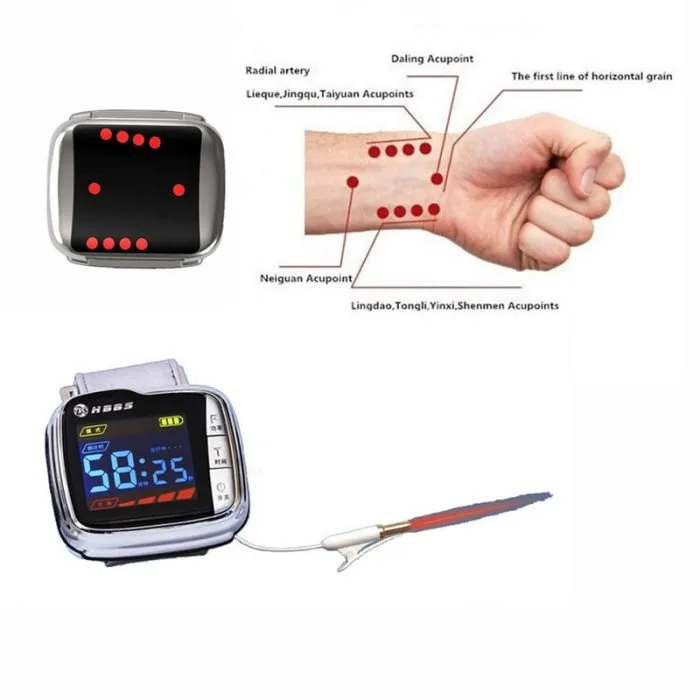
The comparable provider Low Level Laser Therapy Watch is described by the supplier as a wearable device shaped like a wristwatch that emits low-level red laser light. The manufacturer’s public product text identifies the primary emission as a red laser at about 650 nm and positions the device for portable, daily-use wellness applications rather than hospital procedures. It is built to be used on the wrist and nearby soft tissues and is presented as a user-facing, consumer-accessible appliance rather than a clinician-only instrument.
Practical core features to confirm with any supplier edition before you buy:
– exact emitted wavelength(s) and whether 650 nm is the sole wavelength;
– output power and whether the light is coherent laser or non-coherent LED (this affects safety and beam behavior);
– power delivery mode (continuous vs. pulsed) and user controls;
– battery and charging specifications;
– any companion software or mobile app and its data export options;
– the manufacturer’s stated intended use, contraindications and recommended treatment parameters (we do not invent or recommend parameters here).
The manufacturer lists the device’s primary area of application as “Red light (laser 650nm)”. Reported application areas in their product copy include: stress, symptoms of fatigue, anxiety, tensions, rapid heartbeat, high blood pressure, seasonal affective disorder, lack of motivation and insomnia. Those are the supplier’s declared uses; they are not clinical endorsements, and they reflect product positioning for wellness and quality‑of‑life concerns rather than medical treatment claims.
Other company-provided details you should request in writing before purchase:
– a full technical specification sheet identifying emitted wavelength(s), average and peak power, and beam geometry;
– the user manual and the safety/contraindication section;
– any declared certifications (for example, the company declares ISO 9001 and CE marking) and copies of those certificates;
– software or firmware update policy and language support;
– warranty and after‑sales support terms.
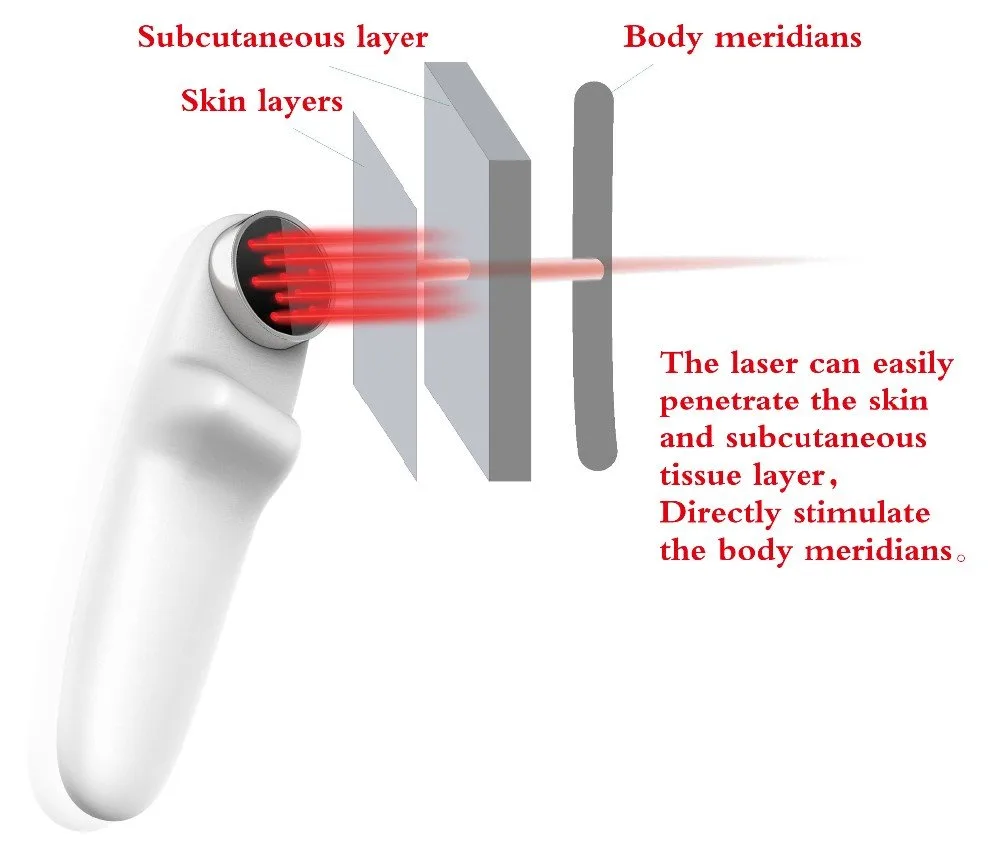
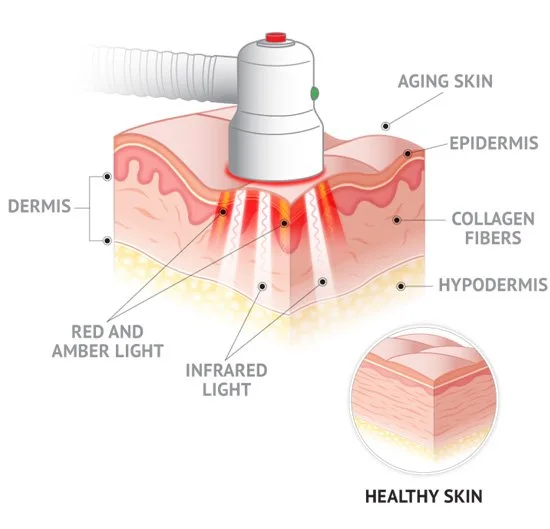
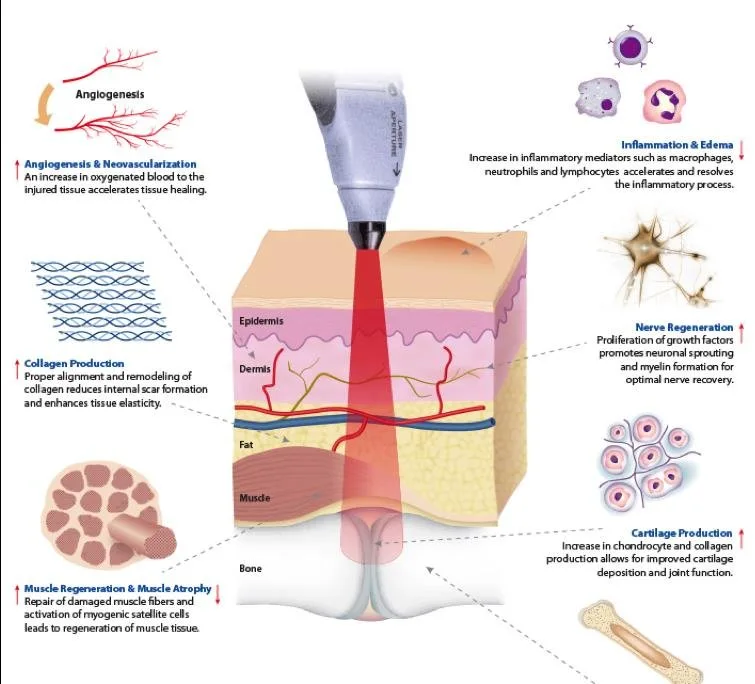
Low-level laser therapy (LLLT), often called photobiomodulation, uses visible red or near‑infrared light to deliver photons to superficial tissues. At the cell level, researchers propose that photons can be absorbed by chromophores—mitochondrial components such as cytochrome c oxidase—leading to transient changes in cellular metabolism, local microcirculation and signaling. The clinical literature on photobiomodulation is diverse; mechanisms remain an area of active study and vary by wavelength, dose and the tissue targeted.
For a wearable wrist device, the practical implications are:
– delivered light primarily reaches superficial tissues (skin, subcutaneous tissue, superficial tendon and vascular plexuses), not deep organs;
– effects are dose‑dependent—wavelength, irradiance (power per area) and exposure time all matter;
– a wearable form factor prioritizes convenience and adherence over the larger-area delivery or higher-power output possible from clinical lamps or lasers.
The watch is best suited to wellness-oriented coaching goals rather than medical treatments. Useful, realistic scenarios include:
These are practical adjunctive uses; none substitutes for medical diagnosis or prescription therapy. When clients present with cardiovascular, psychiatric or other clinically significant conditions, coordinate with their medical provider.
We recommend a standard operating sequence that preserves client safety and clarifies scope. Below is a coach-oriented checklist; do not replace the device manual or clinical advice:
Important reminder: do not create or use your own treatment parameters; always follow the manufacturer’s parameter guide for that device model. If the manual is missing or vague, request clarification from the supplier before any client use.
Client selection should prioritize safety and a clear non-medical scope of service. Candidates who commonly fit into coaching use include adults seeking help with stress, routine sleep-support behaviors, or recovery adjuncts, and who have no medical contra‑indications in the device manual. Clients to refer or decline include anyone with an active clinical condition requiring medical management, acute injury needing medical attention, or any condition listed as a contraindication in the device manual.
Because device-specific contraindications and warnings are not standardized across manufacturers, do not assume a safe use case. Confirm the model’s contraindication list and, if a client has systemic illness, complex medication regimens, a pacemaker or is pregnant, obtain medical clearance before use. When in doubt, refer.
Reasonable outcomes to monitor after introducing a wearable laser device are the same outcome domains you already collect in coaching:
What the device does not prove: using the watch and observing change in a client’s blood pressure or mood does not establish causation. There may be multiple contributing factors (sleep, medication changes, diet, placebo effects). The device alone is not a diagnostic tool and does not replace medical evaluation or evidence-based medical therapies.
Three practical legal and professional cautions for U.S.-based health coaches:
Safety practice basics every coach should adopt: follow the manufacturer’s contraindication list, avoid direct eye exposure to any laser light, document informed consent and any adverse events, and escalate to a clinician for any adverse sign or unexpected client response. If the device manual is unclear, do not use the device with clients until you receive clarification from the supplier or a qualified medical professional.
Modern wearable laser devices often pair with software or an app for configuration, session logs and firmware updates. Before buying, confirm these vendor details:
Coaches will ask how a wrist-worn laser watch compares to other photobiomodulation options. The broad trade-offs are below; these are qualitative considerations rather than measurements.
| Device type | Strengths | Limitations |
|---|---|---|
| Wearable laser watch | Portable, convenient, encourages daily use; discreet; focused on superficial wrist anatomy and local skin/vascular plexuses. | Limited coverage area; lower total energy delivered compared with larger devices; device-specific safety & instructions required. |
| Hand‑held LLLT applicator | Targeted treatment for a specific spot; clinician can position precisely; often adjustable power settings. | Requires operator time; less convenient for client self‑use; training needed for consistent application. |
| Red-light panels / full-body lamps | Deliver light over larger areas and deeper tissues; useful for broader musculoskeletal or skin applications. | Less portable, often more expensive, potential for higher irradiance requiring stricter safety protocols. |
| Nasal or intranasal applicators | Target mucosal surfaces and nasal cavity; used in some photobiomodulation protocols for local effects. | Different safety profile; not suited to general wearable convenience; requires strict cleaning and hygiene procedures. |
When you add a laser watch to a coaching program, treat it like any other behavior-change tool: define goals, set measurable outcomes, and document everything. Tactical tips:
We have no independent record of U.S. FDA clearance for this specific model in our notes. CE and ISO 9001 declarations are company-reported and do not substitute for FDA review. If U.S. regulatory status matters to your practice, request explicit regulatory documentation from the supplier and, if necessary, consult a regulatory attorney.
Resale and distributorship require written agreement with the manufacturer. If you plan to retail devices to clients or act as a local distributor, request commercial terms, warranty coverage, training and after‑sales support in writing from the supplier. Our company provides a distributor channel—see the contact CTA below to express interest.
Ask the supplier for instructor-led training, user manuals and any accredited training materials they provide. Supplement supplier training with guidance from licensed clinicians when using the device with clients who have medical comorbidities.
When you contact the supplier, use a short checklist to qualify their response:
Contact: Lucy — email Lucy@ihunter4025.com | WhatsApp/phone: +8613510907401 | Website: https://ihunter4025.com
We welcome conversations about becoming a U.S. local distributor or agency partner; please include “U.S. distributor inquiry” in your message subject and a brief description of your practice or organization.
This article is for general information about a manufacturer’s wearable low‑level laser device and for coaching practice planning only. It is not medical advice, does not replace a clinician’s judgement, and should not be used for medical diagnosis or treatment. Before using any device with clients, obtain the device manual and safety documentation from the manufacturer and consult a licensed healthcare professional when clients have medical conditions.
本文仅供一般信息参考,不能替代医生诊断或治疗,也不作为医疗诊断依据。
This content is provided for learning, information sharing and professional communication only. It is not medical advice and is not a basis for treatment or diagnosis. Confirm suitability, operation and purchasing requirements against the product manual, local regulations and qualified professional guidance.
If you want the exact model specifications, user manual and distributor terms, contact our sales coordinator to request documentation and a quotation. Provide the intended use case and whether you require multi-language software or distributor arrangements in the United States.