Metatron hunter 4025 nls Supplier

Blog

» Blog

Can a Metatron system be used in a U.S. hospital? Practical guidance for clinical leaders

September 19, 2026

Can a Metatron system be used in a U.S. hospital? Practical guidance for clinical leaders — MAIKONG Hunter 4025 Metatron (737).JPG
MAIKONG Hunter 4025 Metatron (737).JPG

Quick answer

Short practical takeaway: Metatron‑style NLS devices such as the Metatron Hunter 4025 can be installed in a U.S. hospital environment as non‑invasive, adjunctive screening tools, but their clinical use requires careful local review. Hospitals must verify regulatory status and intended use claims, validate performance against an appropriate clinical standard before clinical decisioning, integrate device software and data into hospital IT and record workflows, and secure staff training and documented service agreements. The Metatron Hunter 4025 and Metatron 4021 are company‑supplied products with specific software, scanning methods and feature lists; treat those values as vendor specifications and request model‑specific documentation before purchase. data-citation-section=”direct-answer”

Contents

What hospital clinical leaders usually mean by “Metatron” and related product names

When hospital executives ask about “Metatron,” they usually mean a family of non‑linear diagnostic (NLS) systems that vendors market under names like Metatron Hunter, Metatron 4025 and Metatron 4021. These systems are presented as non‑invasive screening devices that pair a desktop application with sensors and produce image‑based reports and lists of possible organ, pathology or microbial patterns. The devices we describe here are supplied by MAIKONG Industry Co.,Ltd and use software labelled “Hunter” or “4021 NLS” depending on model; the model pages and vendor literature list scanning algorithms, reference databases and feature counts that inform what the system reports.

For quick orientation: Metatron systems are not a single, standardized medical test. Different vendors and software versions implement different scanning methods, reference sets and user interfaces. That variation is why a hospital needs model‑specific documentation and a clear statement of intended use before deploying one in clinical practice.

What Metatron‑style NLS systems actually measure and report in a session (practical scope)

From a clinical operations standpoint, these systems operate as follows:

  • Input and interface: A patient is linked to the system through non‑invasive sensors, typically without blood draws or imaging contrast. The software performs a scan and compares recorded signals against internal reference libraries.
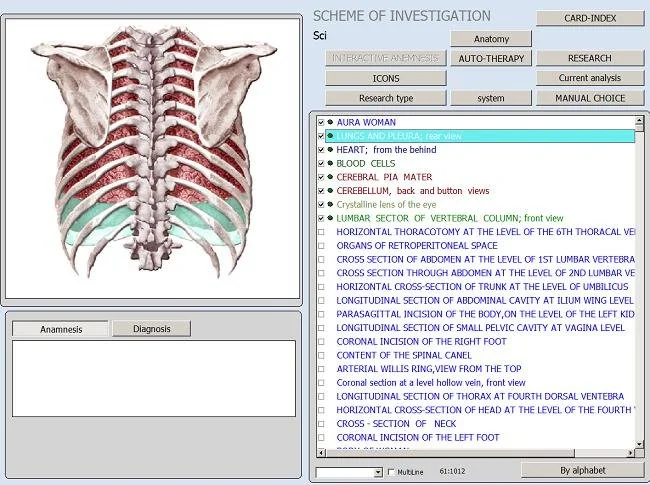
  • Signal processing and pattern matching: Software performs automated pattern recognition — the vendor describes modes such as “Auto 3‑D Spiral Scanning” and “Biological resonance scanning” on some models — and matches output to an internal database of organs, pathomorphologies, microorganisms, supplements and therapeutic items.
  • Output formats: Reports are usually image‑based with an accompanying narrative or “epicrisis.” The vendor lists feature sets such as organ lists, pathomorphologies, microorganism libraries, and itemized lists of homeopathy, nutraceuticals and pharmaceuticals as part of the report generation.
  • Scope of information: These outputs are screening‑style indicators derived from pattern comparisons, not direct biochemical measurements or validated diagnostic tests like laboratory assays, histopathology, or FDA‑cleared imaging modalities.

As a Clinical Director you should therefore treat results as hypothesis‑generating, not diagnostic proof, unless you have validated the device and its software for a narrowly defined clinical use through local study or regulatory clearance.

Verified product snapshot for hospital buyers — Metatron Hunter 4025

Below we summarize vendor‑provided specifications for the Metatron Hunter 4025. These are our company’s published product parameters and should be used to evaluate compatibility and to request formal documentation from the vendor before procurement.

Feature Metatron Hunter 4025 (MK-018)

Key practical notes for hospital review: the “accuracy” value above is vendor‑reported and requires independent clinical validation for any diagnostic intent. The scanning method and large internal libraries drive the breadth of reported items; investigate the version history and reference sources for those libraries when you request documentation.

Additional model notes: Metatron 4021 overview for larger screening workflows

The Metatron 4021 is positioned as a companion or alternative model with a slightly different software and system compatibility profile. We list important vendor values below so you can compare operational requirements.

Feature Metatron 4021 (MK-017)

Operationally, if you plan high‑throughput initial screening in an outpatient setting or employee wellness program, confirm whether the 4021’s software workflow and Windows compatibility are a better match for your existing PCs and endpoint management than the 4025.

Realistic clinical use cases in hospital settings — what hospitals can reasonably expect

Hospital leaders should view Metatron devices as adjunctive screening or triage tools that can support certain operational workflows if used with appropriate controls. Realistic, evidence‑conservative use cases include:

  • Triage support in occupational health or employee wellness clinics: use as an early, low‑burden screen to flag areas for conventional diagnostic follow‑up.
  • Pre‑visit screening in ambulatory clinics to prioritize standard diagnostic testing (where validated locally).
  • Research or pilot programs where the hospital explicitly tests the device against established reference standards under IRB oversight.

Use the device to generate hypotheses for further testing. Avoid using any single NLS report for definitive diagnosis, treatment decisions, or surgical planning without specific clinical validation and documented institutional policy.

Limitations, evidence and regulatory considerations U.S. hospitals must check before use

The following points are non‑negotiable for hospital risk governance:

  • Regulatory status: Confirm whether the specific model and software version have relevant U.S. regulatory clearances or approvals for the intended clinical use. Vendor CE marking and ISO 9001 are company declarations and do not substitute for U.S. regulatory review.
  • Clinical validation: Vendor accuracy figures (for example, the 95%–98% accuracy listed for Metatron Hunter 4025) are vendor‑reported. Obtain the underlying validation reports, study design, population, and statistical methods. If these are absent, plan a local validation study before clinical deployment.
  • Intended use and claims: Only deploy the device within the vendor‑stated intended use that your hospital has verified. Avoid marketing the device as a diagnostic replacement for laboratory or imaging tests.
  • Liability and documentation: Update hospital policies, informed consent language (if needed), and clinician training records to reflect the adjunctive screening role and limitations.
  • Data privacy and security: Confirm that software and data export pathways meet HIPAA and hospital cybersecurity policies.

If any of these checks fail, restrict use to supervised research or demonstration settings until the risks are mitigated.

Integration checklist for hospital IT and clinical workflows

Before signing a purchase order, require the vendor to provide model‑specific documentation that allows your IT, clinical engineering and legal teams to sign off. The checklist below is what we advise hospitals to request and evaluate.

  • Supported operating systems and versions (desktop OS, 32/64 bit) and compatibility testing logs. For example, Metatron Hunter 4025 lists Windows 11, Windows 10, Windows 8, Windows 7 as supported.
  • Data export formats (CSV, XML, DICOM if applicable) and sample output files for the software version you will buy.
  • API documentation or interface specifications for EMR integration, if available; if not available, a confirmed plan for manual report ingestion.
  • Information security summary: encryption at rest/in transit, authentication requirements, and a SOC2 or equivalent statement if available.
  • Audit trail capabilities for user actions and report generation.
  • Software versioning policy, update cadence, and patch procedures.
  • Service‑level agreement, remote support methods, and local spare parts availability.

Installation, staff training and after‑sales support requirements for hospital deployment

For safe and sustainable deployment, budget time and resources for three linked activities:

  1. Installation and acceptance testing — verify hardware siting, power and network requirements, and conduct on‑site acceptance testing against vendor checklists.
  2. Training and credentialing — define which staff roles will operate the device (techs, nurses, physicians), provide hands‑on training from the vendor for the specific software version, and issue competency checklists and ongoing refresher plans.
  3. Support and maintenance — obtain a written support plan: warranty period (vendor lists 1 year for these models), options for extended support, available spare parts, and remote diagnostic capability.

If you plan to run the device in multiple hospital locations, determine whether the vendor supports multi‑site license management and centralized updates.

Operational considerations: session flow, staffing, scheduling and data management

Operational readiness often determines whether a technology improves throughput or becomes a bottleneck. Consider these practical elements:

  • Workflow mapping: Define where the device fits in the patient flow — check‑in, pre‑visit triage, occupational health station, or research clinic.
  • Operator skill level: Identify who performs the scan and who interprets the report. For clinical interpretation, require clinician oversight and clearly documented escalation paths.
  • Scheduling: Allocate appointment blocks that include time for scan, clinician review, and appropriate documentation. Pilot scheduling to measure throughput.
  • Data retention and access: Decide whether reports will be stored in the EMR, in a connected document repository, or archived separately. Confirm retention policies with legal and compliance.

How to evaluate vendor claims and what documentation to request — sample checklist

When a vendor says “95% accuracy” or “autoadjust correct processor’s deviation,” request the evidence. Below is a practical checklist hospitals should use when evaluating claims.

  • Model‑specific specifications sheet and software version used for validation (require release number).
  • Full validation reports: study protocol, sample size, reference standard, inclusion/exclusion criteria, sensitivity/specificity, confidence intervals and statistical methods.
  • Regulatory correspondence or clearance documentation relevant to the U.S. market.
  • Installation and maintenance manuals, and the software user manual for the exact version you will buy.
  • Cybersecurity summary and HIPAA compliance statement.
  • Service agreement, warranty terms and available training curricula.
  • Sample report outputs and de‑identified test data demonstrating typical clinician view and raw export formats.

Do not accept generalized marketing literature in place of the documents above. For claims tied to clinical performance, insist on peer‑reviewed study references or internal validation data.

Configuration and quote factors hospitals must specify when requesting pricing

Because the vendor offers several software and hardware options, ask for a written quote that itemizes the following so you can compare proposals apples‑to‑apples:

  • Model identifier (for example, Metatron Hunter 4025 MK‑018 or Metatron 4021 MK‑017) and software version.
  • Included accessories and sensors, plus recommended spares.
  • License model: per‑seat, per‑site, or perpetual; renewal and update terms.
  • Training package: on‑site vs. remote, number of staff covered, and documentation provided.
  • Warranty length and what it covers; options for extended warranty.
  • Service agreement levels and response times (remote troubleshooting, parts, and shipping costs if applicable).
  • Integration work: costs to provide EMR export, APIs or custom interfaces if required.
  • Delivery and installation fees and lead time (vendor lists lead times of 2–5 days for the 4025 and 4–5 days for the 4021 as typical guides).

If price is not listed, state clearly on the RFQ that you expect an itemized quotation, and require the seller to list exclusions.

What to ask during a pilot or on‑site evaluation

A short pilot allows you to confirm claims before procurement. Include these elements in any pilot:

  • Signed scope and deliverables for the pilot, including specific endpoints (e.g., percent concordance with a reference test for a defined condition).
  • Access to the software version to be purchased, sample report exports and the ability to export raw data for independent analysis.
  • Training for the operator and access to vendor support during the pilot.
  • Plan for data governance and an IRB approval pathway if pilot data will be used for research or diagnostic validation.

How we recommend hospital clinical leaders proceed

We suggest a staged approach that minimizes risk while allowing the hospital to evaluate operational value:

  1. Clarify intended use with stakeholders and legal counsel.
  2. Request and review model‑specific documentation and validation material from the vendor.
  3. Run a controlled pilot under clinical governance, with pre‑specified performance endpoints and data export for independent review.
  4. If performance and integration meet hospital standards, negotiate a detailed service and integration contract that includes cybersecurity, training and warranty terms.

Keep the procurement focused on operational and regulatory acceptance rather than marketing claims.

Sample quick checklist to include with your RFQ

  • Exact model and software version required.
  • List of included hardware and sensors with part numbers.
  • One‑year warranty details and optional extended maintenance pricing.
  • Training hours included and training deliverables.
  • Data export formats and API availability.
  • Cybersecurity and HIPAA compliance documentation.
  • Validation reports and study references used to support any accuracy claims.
  • Itemized delivery, installation, and integration costs.

FAQ (short, clinician‑focused)

Is the Metatron Hunter 4025 FDA‑cleared for diagnostic use in the U.S.?

We provide CE and ISO 9001 information as company declarations; hospitals must verify U.S. regulatory status for the exact model and software version they intend to use. Request regulatory documentation from the vendor and consult your hospital’s regulatory affairs or legal team.

Can output from the Metatron be automatically imported into the EMR?

That depends on the software version and the integrations offered. Ask the vendor for sample export files, API documentation, and an integration plan. If no API exists, plan for a controlled manual import workflow and document chain‑of‑custody for the report.

What does the vendor mean by “accuracy 95%–98%” for the 4025?

That is a vendor‑reported figure. Demand the validation protocol, dataset characteristics and statistical analysis used to produce that number before accepting it for clinical decisioning.

Contact: Lucy@ihunter4025.com • Phone/WhatsApp: +86 135 1090 7401 (also 008613‑51090‑74‑01) • Website: https://ihunter4025.com

If you are interested in representing our products in the United States as a local distributor, please include your organization profile and distribution plan in your initial message; we are open to discussing authorized dealership relationships.

Evidence, limitations and transparency

The product parameters and feature counts referenced in this article are vendor‑supplied specifications for the Metatron Hunter 4025 (data‑fact‑id=”122″) and Metatron 4021 (data‑fact‑id=”119″). We have cited software names, scanning methods and numeric library sizes exactly as provided by the manufacturer. Vendor declarations include CE marking and ISO 9001 in our company profile, which we reproduce as the manufacturer’s stated certifications; hospitals must confirm whether those declarations meet their procurement and regulatory requirements.

Where the vendor reports an “accuracy” metric or library coverage, treat these values as claims that require supporting validation documentation for clinical use. We do not substitute vendor claims for independent regulatory or clinical review.

Final practical judgment for clinical directors

Our pragmatic assessment is this: Metatron systems can be considered for limited, non‑diagnostic clinical roles such as screening, triage support and supervised research pilots if a hospital performs the necessary due diligence. The device’s value lies primarily in operational screening and staff efficiency gains only after the hospital verifies software versioning, regulatory status, cybersecurity and clinical validation for the intended use. Do not deploy the device for diagnostic decision‑making without documented validation and institutional policy.

One‑sentence next step

To get a tailored RFQ and the model‑specific validation and integration documents needed for hospital review, email Lucy@ihunter4025.com with your intended use, preferred model and estimated deployment site.

This article is for general information only; it is not a substitute for professional medical diagnosis or treatment and should not be used as the sole basis for clinical decisions. 本文仅供一般信息参考,不能替代医生诊断或治疗,也不作为医疗诊断依据。

This content is provided for learning, information sharing and professional communication only. It is not medical advice and is not a basis for treatment or diagnosis. Confirm suitability, operation and purchasing requirements against the product manual, local regulations and qualified professional guidance.

If you would like a tailored configuration checklist or a written quote for a pilot deployment in a U.S. hospital setting, contact our sales and clinical integration team. Provide the proposed site, intended use case (triage, research, wellness screening, etc.), and the preferred model (Metatron Hunter 4025 MK‑018 or Metatron 4021 MK‑017) and we will prepare a model‑specific quote and documentation package.



Contact us byWhatsApp Online:


metatron nls hunter contact whatsapp

Maybe you like also